The simple answer to “blog or vlog” is this: a blog is written content on a website, and a vlog is video content, usually on YouTube. Choose a blog if you enjoy writing, want low startup costs, and like working quietly on your own schedule. Choose a vlog if you are comfortable on camera, enjoy talking and showing things, and want faster audience growth through video platforms. Neither one is “better” — they are different tools. The right choice depends on your skills, your topic, your time, and how you like to work each day. This guide compares both side by side so you can pick the one you will actually stick with, because consistency beats format every time.
What Is a Blog?
A blog is a website where you publish written posts, called articles, on topics you know or enjoy. A blog post can be a guide, a review, a list, an opinion, or a story. Readers find your posts through Google search, social media, or by visiting your site directly.
Blogging is one of the oldest forms of online publishing, and it is still strong. Businesses use blogs to answer customer questions. Writers use them to teach, share ideas, and build a name. Travelers, cooks, teachers, and hobby experts all run blogs. You own your blog website, which means you control it fully — the design, the content, and how it earns money. That ownership is the blog’s greatest strength. No platform can delete your account and erase years of work overnight, the way a video or social account sometimes can.
A blog needs very little to start: a domain name, hosting, and your words. It also works quietly in the background. A good post can keep bringing visitors from Google for years with almost no extra work.
What Is a Vlog?
A vlog is a “video blog.” Instead of writing posts, you record videos of yourself talking, teaching, traveling, cooking, reviewing products, or living your day. Most vloggers publish on YouTube, and many also post short clips on TikTok or Instagram.
Video feels personal in a way text cannot. Viewers see your face, hear your voice, and feel they know you. That connection builds loyal fans quickly, which is why vlogging has grown so fast. Brands love video too, and they pay well for it.
But a vlog asks more from you. You must film, speak clearly, edit video, design thumbnails, and keep up with a platform’s rules and algorithm. Your videos live on a platform you do not own. YouTube can change its rules, reduce your reach, or demonetize a channel, and you have little say. A vlog also puts your face and voice in public, which not everyone enjoys.
Blog or Vlog: The Main Differences at a Glance
| Point | Blog | Vlog |
|---|---|---|
| Format | Written articles | Videos |
| Main home | Your own website | YouTube (mostly) |
| Startup cost | Very low | Low to medium |
| Main skill | Writing | Speaking + video editing |
| Time per piece | 2–6 hours per post | 4–10 hours per video |
| Where traffic comes from | Google search | YouTube search + suggested videos |
| Face on camera | Not needed | Usually yes |
| Content lifespan | Years, with updates | Strong start, then slows (shorts fade fast) |
| Ownership | You own everything | Platform owns the stage |
| Income sources | Ads, affiliates, products, services | Ads, sponsors, affiliates, products |
Read the table carefully, because each row hides a daily reality. “Writing” means sitting alone with a keyboard for hours. “Speaking plus editing” means filming in good light, then cutting video on a screen. Choose the daily work you can enjoy for a year, not the one that looks exciting for a week.
Cost: Blogging Is Cheaper to Start
A blog can start for the price of a domain and basic hosting — often less than a single family pizza per month. Free themes and tools cover everything a beginner needs. Your main investment is time.
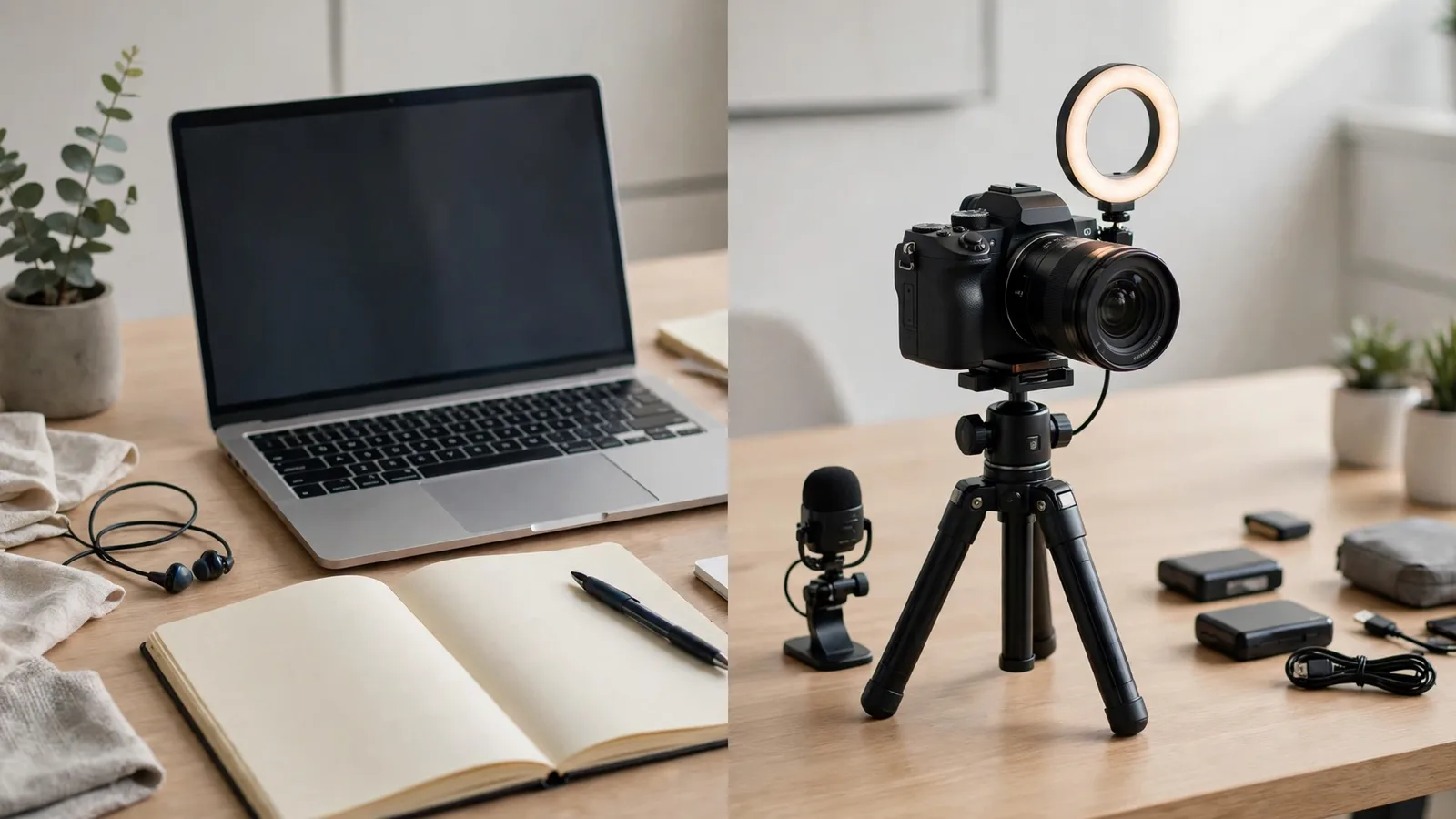
A vlog can start free with a phone, and many successful vloggers began exactly that way. But costs creep in: a microphone for clear sound, a tripod, lighting, editing software, and eventually a better camera. None of these are required on day one, but most vloggers buy them within the first year. Storage also grows, because video files are large.
Winner on cost: the blog, clearly. Winner on “start today with what is in your pocket”: also possible for both — your phone films video, and free blog platforms exist too.
Skills: Writing vs Being on Camera
Blogging rewards writers. You need clear, simple writing, basic research, and a little SEO knowledge so Google can find your posts. If you loved essays at school more than presentations, blogging fits you.
Vlogging rewards performers and teachers. You need to speak in a natural, friendly way, explain things step by step, and hold attention. You also need editing skills — cutting mistakes, adding text and music, and making strong thumbnails and titles. If friends say you explain things well out loud, vlogging may fit you better than you think.
Shyness matters too. Many bloggers are happily invisible. Many vloggers started shy but grew comfortable; others never did, and their channels quietly died. Be honest with yourself. Hiding your face is possible on YouTube — screen recordings, hands-only videos, and narration all work — but those formats need even stronger editing.
Time: Which One Eats Your Day?
A solid blog post takes a few hours: research, writing, editing, images, and publishing. You can write at midnight, in a café, or on a bus. Text is forgiving — you fix a sentence in seconds, even months later.
A video takes longer. Planning, filming (often several takes), editing, making a thumbnail, writing a description, and uploading can fill a whole day. Fixing a mistake after publishing is hard; many creators simply live with it. On the other hand, one video can be cut into several short clips for other platforms, which multiplies its value.
If your free time is small and broken into pieces, blogging bends to fit it. If you have full days to create, video becomes practical.
Making Money: Blog or Vlog?
Both can earn real money, and both take time before the first payment. Here is the honest picture:
| Income source | Blog | Vlog |
|---|---|---|
| Display ads | Yes — grows with traffic | Yes — YouTube ad share |
| Affiliate products | Excellent fit (reviews, guides) | Strong (links in description) |
| Sponsorships | Yes, at higher traffic | Yes — often the top earner |
| Own products/courses | Excellent fit | Excellent fit |
| Services/clients | Very common | Common |
Blogs often earn earlier from affiliate content, because a person searching Google for “best X” is ready to buy. Vlogs often earn more at the top end, because sponsors pay a premium for a trusted face and voice. In both cases, income follows audience trust, and trust follows months of steady, helpful content. Anyone who promises quick money from either is selling you something.
Traffic: Google Search vs YouTube’s Engine
A blog grows through Google. You study what people search for, write the best answer, and climb the rankings. Growth is slow at first — the famous “hockey stick” often takes six to twelve months — but it is steady and largely yours.
A vlog grows through YouTube’s recommendation engine. One video can explode overnight if YouTube suggests it widely, which blogs almost never experience. But the same engine can stop suggesting you, and growth can stall without warning. YouTube also rewards watch time and regular uploads, so the treadmill never fully stops.
Think of it this way: a blog is like planting trees on your own land. A vlog is like performing in a busy market square — bigger crowds, faster, but the square belongs to someone else.
Can You Do Both?
Yes — and many creators eventually do. A common smart path is to start with ONE format, build a library of content, then repurpose it. Blog posts become video scripts. Videos become blog posts with the video embedded, which helps both the website and the channel. Starting with both at once usually means doing both badly, because each is a full skill on its own. Master one kitchen before opening a second restaurant.
Which Topics Suit Which Format?
Some topics lean strongly one way. Written formats shine for: detailed how-to guides, comparisons, definitions, study material, recipes people print, and anything readers search while doing a task. Video shines for: travel, food being cooked, fitness form, beauty, gaming, product demos, repairs, and anything where seeing movement matters. If your topic is “how things look in motion,” video wins. If your topic is “facts people look up,” the blog wins.
Frequently Asked Questions
Is blogging dead because of video?
No. People predicted the death of blogs for fifteen years, yet Google still sends enormous traffic to written guides, reviews, and answers every day. Video grew, but it did not replace reading — especially for research, comparisons, and step-by-step help.
Can I start a blog or vlog for free?
Yes to both. Free blog platforms and free YouTube channels cost nothing. The smart upgrade path is small: for a blog, your own domain and hosting; for a vlog, a simple microphone first, because viewers forgive weak video faster than bad sound.
How long before a blog or vlog makes money?
For most people, the first small income arrives somewhere between six and eighteen months of steady publishing. Some topics and creators move faster; most quit before month three, which is exactly why the ones who stay consistent win.
Do I need to show my face to vlog?
No. Many channels use narration over screen recordings, hands-only demos, animations, or slides. Face-on-camera builds trust faster, but it is a choice, not a rule.
Which is better for SEO?
A blog, directly — your posts rank in Google on your own site. Vlogs rank inside YouTube (the world’s second-biggest search engine) and can also appear in Google video results. The strongest setup, when you are ready, is both working together.
How often should I publish?
Quality and regularity beat volume. One good blog post or video per week, sustained for a year, builds more than twenty posts in a month followed by silence.
Conclusion
Blog or vlog is not a question of which is better — it is a question of which daily work fits your life. Pick the blog if you love writing, want the lowest cost, and value owning your platform. Pick the vlog if you enjoy speaking, showing, and being seen, and you accept a platform’s rules in exchange for its huge crowd. Whatever you choose, your audience will reward the same three things: useful content, honest voice, and steady showing up. Start with one format this week, publish your first piece before you feel ready, and let a year of small steps do what motivation alone never can.