Quartz and quartzite are not the same thing, even though their names sound alike. Quartz countertops are man-made: crushed quartz crystals mixed with resin and color in a factory. Quartzite is a natural stone: real rock that formed deep in the earth when sandstone was changed by heat and pressure. Quartz is easier to live with — it never needs sealing and resists stains well — but it can be damaged by high heat. Quartzite is harder and handles hot pans better, but it must be sealed to fight stains. Both are strong, beautiful, and popular for kitchens. This guide compares quartz or quartzite on hardness, heat, stains, care, looks, and price, so you can choose with confidence.
What Is Quartz?
Quartz countertops are engineered stone. Factories crush natural quartz crystals — one of the hardest minerals on earth — and mix them with a small amount of resin and pigments. The mix is pressed into slabs under great pressure and heat. The finished slab is usually about 93% quartz and 7% resin and color.
Because it is man-made, quartz offers control. Colors are even and predictable, so the slab you choose from a small sample looks almost exactly like the one installed in your kitchen. Patterns range from plain solids to designs that copy marble so well that most guests cannot tell the difference.
The resin in quartz is both its strength and its weakness. Resin makes the surface non-porous, which means liquids sit on top instead of soaking in. Wine, oil, and coffee wipe away without staining, and bacteria have nowhere to hide. No sealing is ever needed. But resin does not love heat. A very hot pan set down straight from the stove can leave a mark or even crack the surface. Trivets are a must with quartz.
What Is Quartzite?
Quartzite is 100% natural stone. It began as sandstone — layers of sand pressed together — buried deep underground. Over immense time, heat and pressure fused the sand grains into a dense, glassy rock. Miners cut it from quarries in large blocks, and each slab is truly one of a kind.
Quartzite is harder than quartz. On the Mohs hardness scale, quartzite rates around 7 to 8, which makes it harder than granite and far harder than marble. Knives and daily wear barely touch it. It also shrugs off heat: a hot pan is far less likely to hurt quartzite than quartz.
The trade-off is porosity. Quartzite is natural rock, and like most natural rock it has tiny pores. Unsealed, it can absorb oil, wine, and sauces and keep them as stains. The fix is simple but real: seal the stone when it is installed, and reseal it about once a year (some sealers last longer). Etching is the other caution. A few stones sold as “quartzite” are actually softer stones with some marble in them, and those can etch from lemon or vinegar. A simple test before buying — a drop of lemon juice or vinegar on a sample — shows whether the stone reacts. True quartzite does not etch.
Quartz or Quartzite: Side-by-Side Comparison
| Feature | Quartz (man-made) | Quartzite (natural) |
|---|---|---|
| What it is | Crushed quartz + resin | Natural stone from quarries |
| Hardness | Very hard (about 7) | Harder (about 7–8) |
| Heat resistance | Can be damaged by hot pans | Excellent — handles heat well |
| Stain resistance | Excellent, non-porous | Good only when sealed |
| Sealing needed | Never | About once a year |
| Color choice | Wide, uniform, predictable | Natural, unique, varies by slab |
| Marble look | Copies it very closely | Real stone veining |
| Sunlight (outdoor use) | Can fade/discolor over time | Handles outdoors well |
| Price | Mid to high | High to very high |
| Repairs | Hard to repair invisibly | Hard to repair invisibly |
The short version: choose quartz for easy care and design control. Choose quartzite for natural beauty, top hardness, and heat freedom — with a little yearly care.
Hardness and Daily Wear
In a busy kitchen, counters meet knives, heavy pots, dropped cans, and dragged appliances. Quartzite wins this round on paper: it is one of the hardest counter materials you can buy, and it resists scratches superbly. Quartz is nearly as hard and will not scratch under normal cooking, but dragging a heavy cast-iron pan or gritty object across either stone is unwise. Both stones can chip at edges and corners if struck hard — a dropped pot cares little about hardness ratings. Use cutting boards on both. The habit protects your knives as much as your counters.
Heat: The Biggest Practical Difference
Heat is where the two stones truly part ways. Quartzite formed under the earth’s heat and pressure, so a hot pan barely fazes it. Quartz carries resin, and resin can scorch or discolor at high temperatures; sudden heat can even cause a crack from thermal shock. In practice: with quartzite, you still should use trivets, but a forgotten hot skillet is unlikely to ruin your day. With quartz, trivets are not optional, and neither are care with slow cookers and electric skillets left running on the surface, which can build up damaging heat underneath. If you cook with screaming-hot cast iron daily and set pans anywhere, quartzite is the safer home for your habits.
Stains, Sealing, and Cleaning
Day to day, quartz is the lower-effort stone. Spills wipe up, nothing soaks in, and cleaning needs only soap, water, and a soft cloth. Skip harsh scouring pads, and avoid strong chemicals that can dull the resin.
Quartzite asks for a small routine. Keep it sealed — sealing takes under an hour once a year for most kitchens: clean the stone, wipe sealer on, let it soak, wipe off the extra. Between sealings, wipe spills reasonably soon, especially oil, wine, coffee, and tomato. Use a stone-safe cleaner or plain soap and water, and avoid acidic cleaners like vinegar sprays, which can harm any softer mineral spots in the slab. Owners who keep this light routine report counters that look new after a decade.
Looks: Controlled Design or One-of-a-Kind Stone
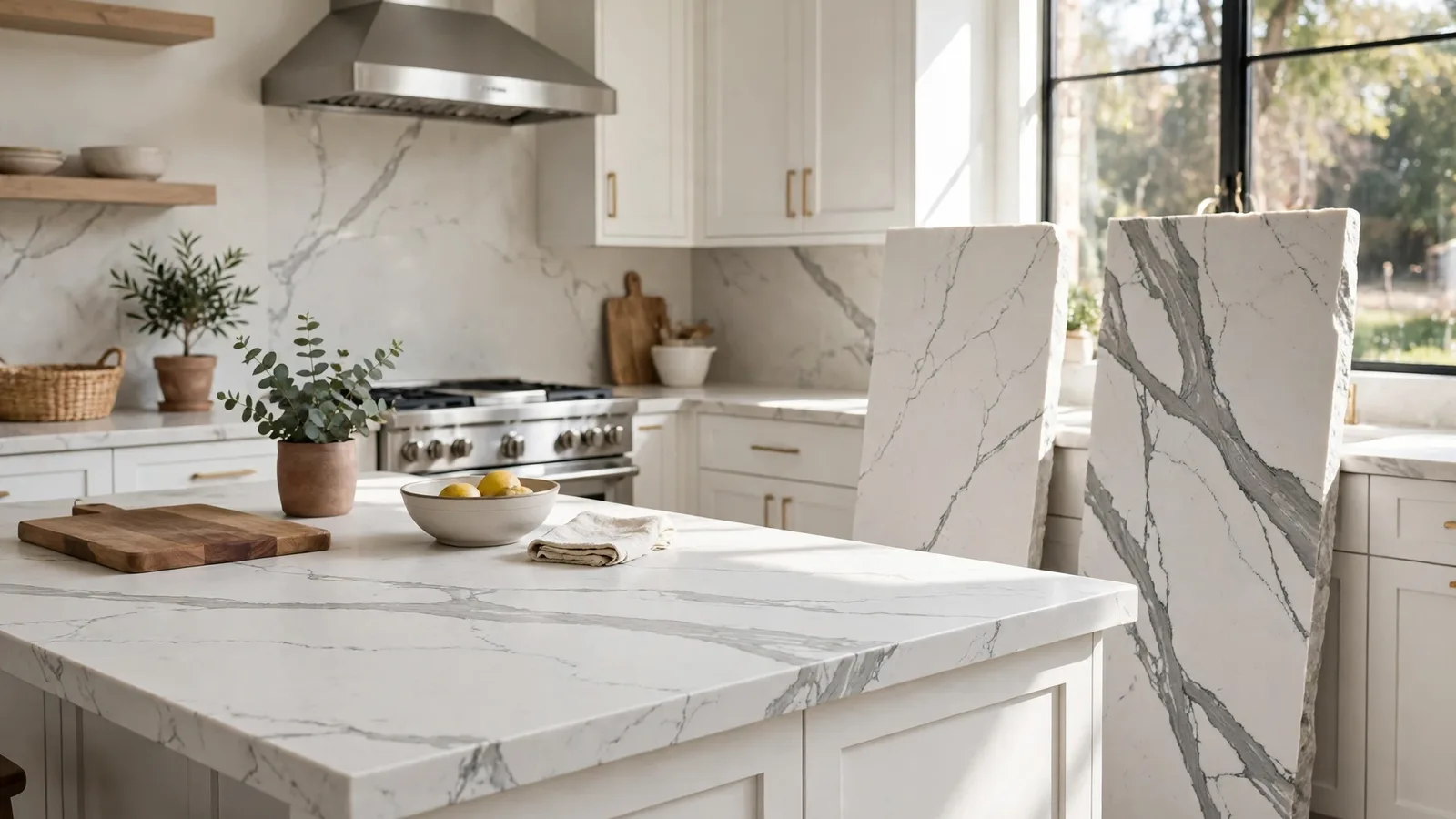
Quartz gives you design certainty. Samples are trustworthy, seams match well, and modern patterns copy white marble veining beautifully — many people choose quartz precisely to get the marble look without marble’s staining and etching problems.
Quartzite gives you nature. Its veining, color shifts, and depth come from the earth, and no second slab on the planet matches yours. Some quartzites are soft white with gray veins; others are dramatic — deep blues, greens, and golds. Because every slab differs, you should choose your exact slab at the stone yard, not from a photo. What you see is what gets installed, and surprises here are permanent.
Cost: What You Will Actually Pay
Prices move with your city, the stone’s rarity, edge style, and cutouts, but the pattern is steady: quartz usually lands in the mid-to-high range, and quartzite in the high-to-very-high range, often above granite. Exotic quartzites with rare colors cost the most. Remember the lifetime view, too: quartz needs no sealing products and fewer repairs from stains, while quartzite needs yearly sealer (cheap) and rewards you with heat tolerance. Installation costs are similar for both, since both are heavy stone slabs needing skilled fabricators. Get quotes on your exact slabs — in both materials, the specific slab matters more than the category.
Which One Should You Choose?
Choose quartz if you want the calmest daily life: no sealing, strong stain resistance, predictable color, and a perfect marble look without marble’s worries — and you are happy to use trivets.
Choose quartzite if you love real stone, cook hard with hot pans, want the hardest surface available, and do not mind a short sealing routine once a year.
Avoid both if your budget is tight — quality laminate and butcher block serve many kitchens well for far less. And whichever stone you choose, visit the slab yard, test a sample with lemon and oil, and pick the exact piece that will live in your home.
Frequently Asked Questions
Is quartzite better than quartz?
Neither is simply “better.” Quartzite is harder, more heat-proof, and natural. Quartz is easier to care for, never needs sealing, and offers more predictable designs. The better stone is the one that matches your cooking habits and your patience for upkeep.
Can you put a hot pan on quartzite?
Yes, quartzite handles heat very well — far better than quartz. Even so, fabricators recommend trivets as a habit, mainly to protect against freak accidents and to keep any sealer in good shape.
Does quartz stain?
Real staining is rare because quartz is non-porous. Spills sit on the surface and wipe off. However, strong dyes, markers, and some chemicals can leave marks, and heat damage can look like a stain. Clean spills when you notice them, and you will have no trouble.
How often does quartzite need sealing?
About once a year for most kitchens, though some modern sealers last longer. A simple water test tells you when: sprinkle water on the stone. If it beads up, the seal is fine. If it soaks in and darkens the stone within minutes, it is time to reseal.
Is quartzite harder than granite?
Yes. Quartzite rates higher on the hardness scale than granite, which is one reason it has become so popular. It resists scratches and wear at the very top level of natural stones.
Why is some quartzite cheaper than other quartzite?
Be careful with very cheap “quartzite.” Some slabs sold under that name contain softer minerals or are partly marble, and they can etch and stain easily. Test any bargain slab with lemon juice on a sample before you buy. True quartzite does not react.
Conclusion
Quartz or quartzite is a choice between factory control and natural character. Quartz, the man-made blend of crystal and resin, gives you easy days: no sealing, strong stain defense, and colors that match the sample — at the price of fearing hot pans. Quartzite, the earth’s own stone, gives you superior hardness and heat freedom plus veining no factory can copy — at the price of yearly sealing. Stand in the stone yard, touch both, and think about how you really cook. The right countertop is the one that fits your habits so well you stop thinking about it, and simply enjoy the kitchen it completes for years to come.