If you play tennis, badminton, squash, or table tennis, you have probably seen both spellings: racket and racquet. They sound exactly the same, they mean the same thing, and both appear in shops, sports articles, and everyday writing. So which one should you use? The honest answer is that both are correct, but one is far more common today, and the other survives mainly in certain contexts.
This article explains the difference in plain language. You will learn what each spelling means, where each form is used, how sports organizations spell it, and which choice is safest for your writing. By the end, the choice will feel simple.
What Does Racket Mean?
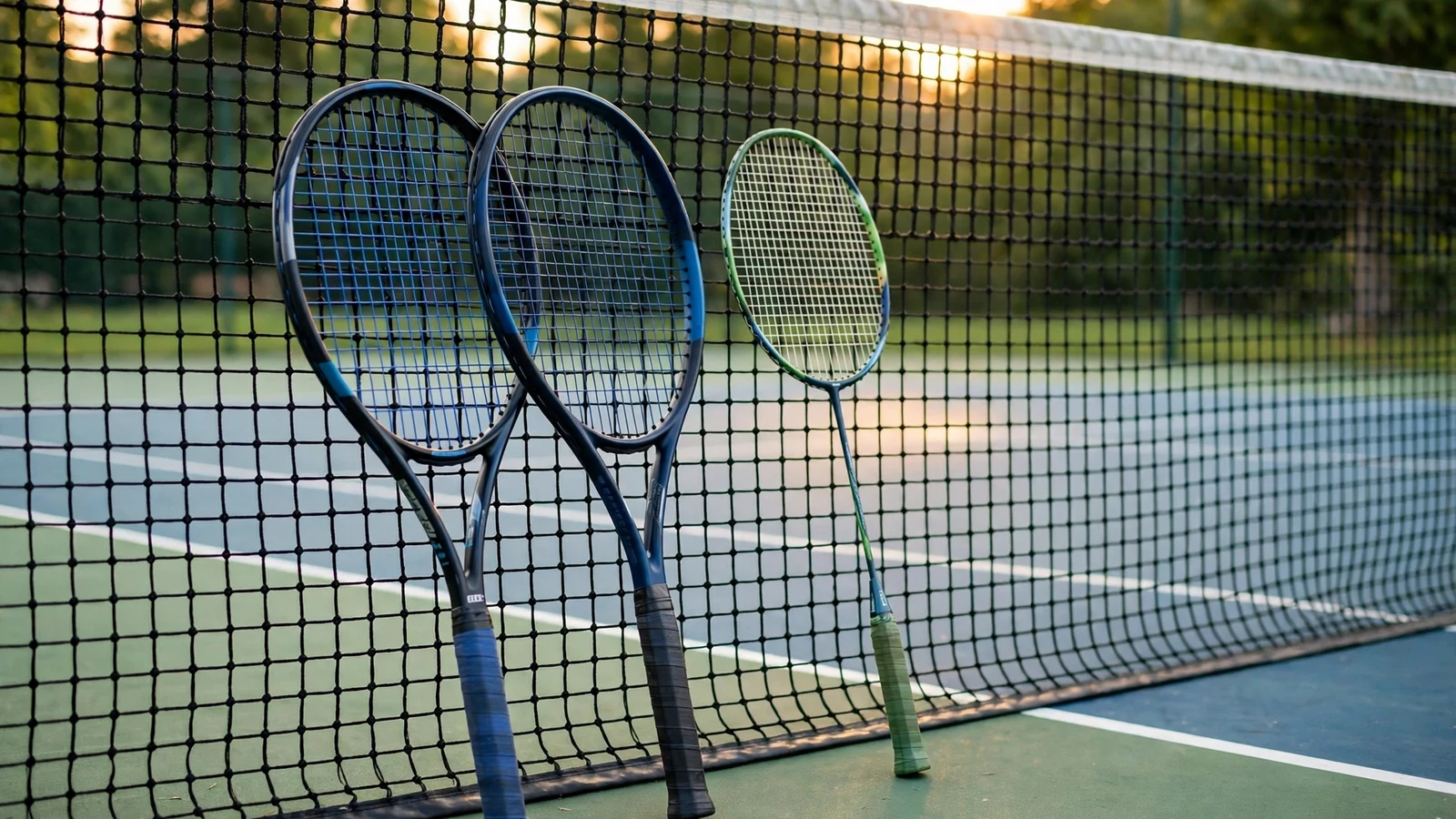
A racket is a sports bat with a handle and a frame strung with cords or strings, used to hit a ball or shuttlecock. Tennis rackets, badminton rackets, squash rackets, and racquetball rackets all fit this definition. The word can also mean a loud noise, as in “What a racket those neighbours are making,” and, in informal use, a dishonest scheme, as in “a protection racket.” In this article, we are concerned with the sports meaning.
The spelling “racket” is the standard, modern form in most English writing today. It is the form used by major dictionaries, newspapers, and most sports bodies. If you write “tennis racket” in an essay, an email, or a product description, no reader will question it. It is clear, current, and universally understood.
What Does Racquet Mean?
“Racquet” means exactly the same thing as “racket” in the sports sense. It is an older variant spelling that came into English from French, where the word was spelled “raquette.” For a long time, both spellings lived side by side, and “racquet” was once the more fashionable form in Britain, especially for certain sports.
Today, “racquet” is much less common, but it has not disappeared. You will still see it in the names of some clubs, sports, and brands. The most famous example is racquetball, a sport whose name is almost always spelled with a “q.” Some squash and tennis clubs also keep “racquet” in their official names for tradition, even though their members usually write “racket” in everyday messages.
Racket vs Racquet: Quick Comparison
| Feature | Racket | Racquet |
|---|---|---|
| Meaning | Sports bat with strings | Same sports bat with strings |
| Current usage | Standard and most common | Older variant, less common |
| Where you see it | Dictionaries, news, most sports bodies | Club names, racquetball, some brands |
| Pronunciation | Same | Same |
| Correctness | Correct | Correct, but dated in general use |
| Best for | Everyday and formal writing | Proper names that already use it |
The key point is that the difference is spelling only, not meaning or pronunciation. No one will misunderstand you if you choose either form, but readers may notice “racquet” as old-fashioned or formal in general writing.
A Short History of the Two Spellings
The word reached English from French “raquette,” which itself came from an Arabic word for the palm of the hand. Early English writers adapted the French spelling in different ways, and for centuries both “racket” and “racquet” appeared in books and newspapers. In the 1800s, “racquet” was popular in British sporting writing, and many clubs founded in that era kept the spelling in their names.
Over the twentieth century, English spelling gradually simplified, and “racket” became the dominant form in both British and American English. Dictionaries listed “racket” first, schools taught “racket,” and sports organizations followed. “Racquet” survived mainly where tradition mattered: in proper names, in the sport of racquetball, and in a few clubs that did not want to change a historic name.
This pattern is common in English. Older spellings often survive in names long after everyday writing has moved on. Think of how some shops keep old-fashioned spellings in their signs while everyone else uses the modern form.
Which Spelling Do Sports Bodies Use?
Most major sports organizations use “racket.” The International Tennis Federation, national tennis associations, and most equipment makers write “racket” in their rules, product names, and websites. Badminton’s world body also uses “racket” in its laws of the game, even though many players casually say “racquet” in speech.
Racquetball is the big exception, and it is an exception because it is a proper name. The sport was named with the “racquet” spelling, and that spelling is part of its identity. If you write about racquetball, keep the “q” in the sport’s name. Writing “racketball” for the sport would look like a mistake, even though “racket” is correct for the equipment in general.
Squash sits in between. You will see both “squash racket” and “squash racquet” in different clubs and articles, but “squash racket” is now the more common form in general writing. When in doubt, check how the specific club or tournament spells its own name, and match that name exactly.
Examples in Sentences
Both spellings work in the same sentences, which shows why the choice is about style rather than meaning.
- “She bought a new tennis racket for the summer season.”
- “He broke a string on his badminton racket during the final.”
- “The club, founded in 1890, still calls itself the City Racquet Club.”
- “Racquetball is played with a short racket and a hollow rubber ball.”
- “Please bring your own racket; the centre has only a few to lend.”
- “Her squash racquet, an old family heirloom, still plays beautifully.”
Notice the third and fourth examples: “Racquet” appears because it is part of a proper name. In the other examples, “racket” is the natural choice. A useful rule is to use “racket” everywhere except in proper names that already contain “racquet.”
Common Mistakes to Avoid
One mistake is mixing the two spellings in the same document without reason. If you write “tennis racket” in one paragraph and “tennis racquet” in the next, readers may think one of them is a typo. Pick one form for general use and stick to it, except for proper names.
Another mistake is “correcting” a proper name. If a club is called the “Racquet Club” or a sport is called “racquetball,” do not change the spelling to “racket.” Proper names keep their own spelling, even when it differs from the modern standard.
A third mistake is confusing “racket” the sports equipment with “racket” the noise. Context makes the meaning clear in almost every case, but if you write “the children made a racket with their rackets,” the joke writes itself. In serious writing, rephrase to avoid the clash.
Finally, do not assume that “racquet” is the American spelling and “racket” the British spelling, or the other way round. Both countries now use “racket” as the standard form. The difference is historical, not regional.
Which Should You Use?
For almost all writing, use “racket.” It is the standard form in dictionaries, schools, news, and sports bodies, in both British and American English. It will never be marked wrong, and it looks modern and clean.
Use “racquet” only in two situations: when it is part of a proper name, such as “racquetball” or a club called the “Racquet Club,” and when you are writing in a deliberately traditional or historical style and want the older flavour. Even then, be consistent, and do not switch back and forth.
If you are writing for a website or a school assignment, “racket” is the safe answer. If a teacher or editor asks for “racquet,” follow their house style, but know that “racket” remains the widely accepted default.
Choosing the Right Racket for Your Sport
Spelling is only half the story for players; the equipment itself also differs by sport, and the names can add to the confusion. A tennis racket is large and heavy, with a long handle and a wide string bed built for powerful groundstrokes. A badminton racket is much lighter and thinner, designed for fast wrist movement and a feather-light shuttlecock. A squash racket is shorter and sturdier, made to survive hard hits against walls in a small court.
| Sport | Typical racket | Key feature |
|---|---|---|
| Tennis | Long, heavy, wide head | Power and spin |
| Badminton | Light, thin, flexible | Speed and control |
| Squash | Short, sturdy, small head | Durability in a tight court |
| Racquetball | Short, compact, wide head | Power in a small, fast game |
| Table tennis | Small bat, no strings | Spin from rubber surface |
Beginners often make the mistake of buying a professional player’s racket, which can be heavy and unforgiving. A lighter, mid-sized racket with a larger head is usually easier to play with and more forgiving on off-centre hits. Grip size matters too: a grip that is too small forces you to squeeze harder, while one that is too large strains the wrist. Most shops will let you hold several rackets and test the grip before you buy.
String tension is another choice that affects play. Lower tension gives more power and a softer feel, while higher tension gives more control and precision. Beginners usually benefit from lower tension, while advanced players who generate their own power often prefer higher tension. Whatever you choose, remember that the word on the shop label will almost always be “racket” today, even if the club on the door still says “racquet.”
The Word in Other Sports and Languages
The spelling question does not stop at tennis and squash. In table tennis, the equipment is usually called a bat or paddle in English, not a racket, even though it serves the same purpose. In French, the word remains “raquette,” which explains why the English variant “racquet” kept its “q” for so long. In Spanish, “raqueta” is the standard form, and in German, “Schläger” is used instead. These cousins show how one family of words spread across languages with small spelling changes in each place.
For English learners, the lesson is reassuring: the spelling changes, but the idea stays the same. Whether a shop sign says “racket” or a historic club says “racquet,” you are looking at the same piece of sports equipment. Focus on the sport, the size, and the grip, and let the spelling take care of itself.
Frequently Asked Questions
Is “racket” or “racquet” correct?
Both are correct spellings for the sports equipment. “Racket” is the standard modern form, while “racquet” is an older variant that survives mainly in proper names.
Why are there two spellings?
The word came from French “raquette,” and English writers adapted it in different ways. Over time, “racket” became the dominant spelling, while “racquet” stayed in some club names and in the sport of racquetball.
Is “racquet” the British spelling?
No. Both British and American English now use “racket” as the standard form. “Racquet” is historical rather than regional.
Should I write “racquetball” or “racketball”?
Write “racquetball.” It is the official name of the sport, and the “q” spelling is part of that name, even though the equipment itself is usually called a racket.
Do tennis and badminton use different spellings?
No. Both sports use “racket” in modern official writing. You may see “racquet” in older club names for either sport, but that is tradition, not a different rule.
Will I lose marks for using “racquet”?
In most school and exam settings, “racquet” is accepted because dictionaries list it as a variant. However, “racket” is the safer choice, since it is the first-listed and most common form.
Conclusion
Racket and racquet are two spellings of one word, not two different words. History explains why both exist, and tradition explains why “racquet” still appears in club names and in racquetball. For everyday and formal writing, “racket” is the clear winner: it is standard, modern, and understood everywhere. Save “racquet” for the proper names that already own it, and your writing will look confident and consistent every time.