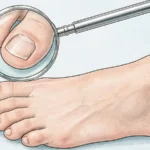
A dark or strange-looking toenail is usually toenail fungus or a simple injury, not cancer. Toenail fungus is very common and makes the nail yellow, thick, and crumbly. Toenail melanoma is rare, but it is a serious skin cancer that grows under the nail, and it often shows as a dark brown or black streak that slowly gets wider. The two problems can look alike at first, so the safe rule is simple: if a dark mark does not grow out with the nail, or it keeps changing, get it checked by a doctor. This guide explains the clear signs of each one, so you know what you are looking at and when to act fast.
What Is Toenail Fungus?
Toenail fungus is an infection of the nail caused by tiny fungi, the same kind of germs that cause athlete’s foot. The fungi slip into the nail through a small crack or a tiny gap where the nail meets the skin. Once inside, they feed on the nail and slowly damage it.
Fungus loves warm, wet places. That is why it is so common on feet. Shoes hold heat and sweat all day, and bare feet in locker rooms, pools, and shared showers pick the fungi up easily. Older adults get toenail fungus more often because their nails grow slowly and their blood flow is weaker. People with diabetes or a weak immune system also face a higher risk.
A nail with fungus usually changes color first. It may turn yellow, white, or light brown. Then it often gets thick, rough, and crumbly at the edges. Sometimes it lifts a little from the nail bed, and bits of debris collect under it. Toenail fungus rarely hurts at the start. Its main danger is that it spreads — to other nails, to the skin, or to other people in the home. It does not turn into cancer. Fungus and melanoma are two different problems that only look similar.
Doctors treat fungus with creams, nail liquids, or pills that kill the fungi. Treatment works, but it takes months, because the nail must grow out fresh and clean. The good news is that fungus is an infection, and infections can be cured.
What Is Toenail Melanoma?
Toenail melanoma is a rare type of skin cancer. Its full medical name is subungual melanoma, which simply means melanoma under the nail. It starts in the cells that make skin color. Those cells sit under the nail, so the cancer grows where you can barely see it.
This cancer does not come from the sun the way most skin cancers do. Doctors do not fully know why it starts. It can appear on any toe, but it shows up most often on the big toe. It also appears under fingernails, most often the thumb. People of every skin color can get it, and it is one of the more common melanoma types in people with dark skin.
The classic sign is a dark line or streak running down the nail, from the base to the tip. The streak is usually brown or black. At first it may look thin and neat, like a line drawn with a pen. Over months, it can grow wider, develop uneven edges, or show several shades of brown. In later stages, the nail may split, crack, bleed, or lift. Dark color may also spread onto the skin at the base of the nail. That spread onto the skin is a strong warning sign, and doctors call it the Hutchinson sign.
Melanoma under the nail is dangerous because it is often found late. Many people mistake it for fungus or a bruise and wait. Waiting gives the cancer time to grow deeper and spread. Found early, it can be removed with surgery. Found late, it is much harder to treat. That is why every strange dark mark on a nail deserves respect.
Toenail Melanoma or Fungus: The Key Differences
The table below puts the two side by side. Use it as a first guide only. No table can replace a doctor, because early melanoma and fungus can look very much alike.
| Sign | Toenail Fungus | Toenail Melanoma |
|---|---|---|
| Usual color | Yellow, white, or light brown | Brown or black streak |
| Shape | Color spreads across the nail | A line from base to tip |
| Nail feel | Thick, rough, crumbly | Nail may split, crack, or lift late |
| Number of nails | Often several nails | Usually one nail |
| Pain | Rare at the start | Sometimes pain or bleeding later |
| Color on nearby skin | No | Possible, and it is a warning sign |
| Speed | Slow changes over months | Streak slowly widens over months |
| Cause | Infection by fungi | Cancer in color-making cells |
A quick way to remember the difference: fungus paints the whole nail in pale colors and makes it thick and crumbly. Melanoma draws a dark line on one nail and slowly makes that line wider.
Signs That Point to Fungus
Some signs lean strongly toward fungus. The nail turns yellow or white, not dark brown or black. The color often starts at the tip or the side of the nail and creeps back. The nail grows thick and uneven, and the free edge crumbles like chalk when you trim it. White or yellow debris may pack under the nail and give off a slight smell. More than one nail is often affected, and the skin between the toes may itch or peel, which points to athlete’s foot as the source. The change also tends to be painless for a long time. If your nails match most of this picture, fungus is the likely answer — but “likely” is not “certain.” If treatment does not help after a few months, ask a doctor to test the nail, because a small number of “fungus” nails turn out to be something else.
Signs That Point to Melanoma
Other signs lean toward melanoma, and any one of them means you should book a doctor soon. A dark brown or black streak runs the length of one nail. The streak is wider than a thin hairline — about 3 millimeters or more — or it keeps getting wider. Its edges look blurry or uneven, and the color is not the same all through. The streak does not move toward the tip as the nail grows. The nail above the streak splits or cracks. Dark pigment spreads onto the cuticle or the skin fold at the base. The spot bleeds, hurts, or lifts the nail without any injury you remember. Age matters too: a new dark streak in a person over 50 deserves a check. None of these signs proves cancer. Only a test can do that. But each sign is a reason not to wait and watch for another season.
Could It Just Be a Bruise Under the Nail?
Yes, and this is the third common cause of a dark toenail. Stubbing your toe, dropping something heavy on it, or running long distances can trap blood under the nail. The spot looks dark red, purple, or black, and it can look scary. The good news is that a bruise gives itself away over time. As the nail grows, the dark spot slowly moves toward the tip, like a boat drifting down a river, and in a few months it grows out and disappears. Melanoma does not do this. It stays at the base and often widens while the nail grows. So the simple home test is time and movement. Take a photo of the nail today, with the date. Check it again in six to eight weeks. If the dark area has clearly moved up with the nail growth, it was almost surely blood. If it has not moved, or it looks wider, see a doctor and show both photos.
Who Is at Risk for Each Problem?
Knowing the risk factors helps you judge a strange nail. Still, remember that risk is not proof — anyone can get either problem.
| Risk factor | Fungus | Melanoma under the nail |
|---|---|---|
| Age | More common after 60 | Most common between 50 and 70 |
| Wet feet, shared showers | Strong risk | No link |
| Athlete’s foot | Strong risk | No link |
| Diabetes or weak immunity | Higher risk | No clear link |
| Nail injury | Can start infection | Often blamed, not a proven cause |
| Skin color | All groups | All groups; key type in dark skin |
| Family history of melanoma | No link | Higher risk |
One warning hides in this table. Because melanoma under the nail is not caused by the sun, people with dark skin sometimes think they are safe from it. They are not. This cancer appears in every group, and in some groups it is found later precisely because no one expected it.
When Should You See a Doctor?
See a doctor promptly if you notice any of the following:
- A new dark streak or spot on one nail with no injury you remember
- A dark streak that is getting wider or has uneven edges
- Dark color spreading onto the skin at the base of the nail
- A nail that splits, bleeds, hurts, or lifts for no clear reason
- A dark spot that has not moved or grown out after two to three months
- Any nail change that is getting worse instead of better
Do not feel silly about going. Doctors would much rather look at ten harmless nails than miss one cancer. A dermatologist, a doctor for skin and nails, is the best choice for a dark nail mark. Bring your dated photos if you have them. They help the doctor see how the mark has changed, and change over time is one of the most useful clues there is.
How Doctors Check the Nail
First, the doctor looks at the nail closely, often with a small handheld tool with a light and a lens. This painless check can reveal patterns that the naked eye misses. The doctor will ask when you first saw the mark, whether you injured the toe, and whether you have tried fungus treatment. If fungus seems likely, the doctor may take a tiny nail clipping and send it to a lab. The lab result shows whether fungi are really there before you spend months on medicine. If melanoma is possible, the doctor will arrange a biopsy. That means removing a small piece of the nail bed tissue for testing. A biopsy is the only way to be sure. It is a short procedure with numbing medicine, and its answer protects you either way: peace of mind, or treatment started as early as possible.
The Bottom Line on Treatment
For fungus, treatment means antifungal medicine and patience. Creams and liquids work for mild cases. Pills work better for deep infections but need a doctor’s guidance and sometimes blood tests. The nail clears slowly as new, healthy nail grows in — often six to twelve months for a toenail. For melanoma, treatment means surgery to remove the cancer, and the earlier it happens, the smaller the surgery and the better the outcome. Late cases may need more treatment. This is why the real lesson of “toenail melanoma or fungus” is not to guess at home for a year. A short visit gives you a name for the problem and the right fix for it.
Frequently Asked Questions
Can toenail fungus turn into melanoma?
No. Fungus is an infection and melanoma is a cancer; one does not change into the other. The danger is different: a melanoma can hide under a nail that everyone assumes is “just fungus,” which delays the right treatment.
How fast does toenail melanoma grow?
It usually grows slowly over months or even years. That slow speed is part of the problem, because people keep waiting. Slow does not mean safe. Any streak that widens or changes deserves a check, however slow it seems.
Is a black line on my toenail always cancer?
No. Most dark marks are bruises or harmless pigment, and fungus causes many color changes too. But a black or brown line on one nail is exactly the sign doctors want to see early, because they cannot tell the harmless ones from melanoma without a close look or a test.
Does toenail melanoma hurt?
Often it does not hurt at first, which is why people ignore it. Pain, bleeding, or a splitting nail usually come later. Do not use “it doesn’t hurt” as a reason to wait.
Can I treat it as fungus first and see?
Doctors sometimes do try antifungal treatment when fungus looks most likely, but only with a firm check-back date. The risk is losing months if the mark is really melanoma. If you treat for fungus, set a limit of about three months. No clear improvement means a doctor visit and a nail test, not another tube of cream.
Which doctor should I see for a dark toenail?
Start with a dermatologist, the skin and nail specialist. If none is available, your regular doctor can look, take photos, and refer you. The key step is simply getting the nail in front of a doctor while the mark is still small.
Conclusion
A strange toenail is usually fungus or a bruise, and both are manageable. But melanoma, though rare, is the one cause you cannot afford to miss, because early treatment makes a huge difference. Remember the simple checks: fungus turns nails yellow, thick, and crumbly, often on several nails. A bruise moves toward the tip as the nail grows. A melanoma streak stays in place, sits on one nail, and slowly widens. When in doubt, take a dated photo, watch for movement for a few weeks, and then let a doctor decide. Even everyday words matter here — understanding what a fungus is helps you describe your problem clearly at that visit, and clear words lead to faster, better care for your feet.