The weather in Brookings, OR is mild all year: winters are wet but rarely cold, summers are dry and cool, and a warm local wind called the Chetco effect can push temperatures into the 70s or 80s in any month. Brookings sits on the southern Oregon coast, close to the California border, and people call it the “Banana Belt” of Oregon because it is often the warmest, sunniest spot on the whole coast. Snow is rare, hard freezes are rare, and true heat waves are rare. The one thing you must plan for is rain, which falls heavily from late fall to early spring. This guide walks through every season, the famous warm wind, and the best times to visit.
Where Brookings Is and Why Its Weather Is Special
Brookings is a small coastal city in Curry County, in the far southwest corner of Oregon, just north of California. The Pacific Ocean lies on one side, and the Klamath and Siskiyou mountains rise on the other. That mix of sea and mountains shapes every day of weather here.
The ocean works like a giant thermostat. It keeps winters warmer and summers cooler than places inland. Brookings almost never sees the deep freezes that hit the rest of Oregon, and it almost never bakes in summer heat either. On an average year, only about two afternoons reach 90°F (32°C) or higher, and only a handful of mornings drop to freezing. The coldest temperature ever recorded was 18°F (−8°C) back in December 1972, and even that was a rare event.
The mountains add the second gift: shelter. They block some of the cold air and low clouds that cover much of the Oregon coast. The result is a small pocket of gentler weather that locals treasure — and a microclimate that can differ from towns just thirty miles away.
The Chetco Effect: Brookings’ Famous Warm Wind
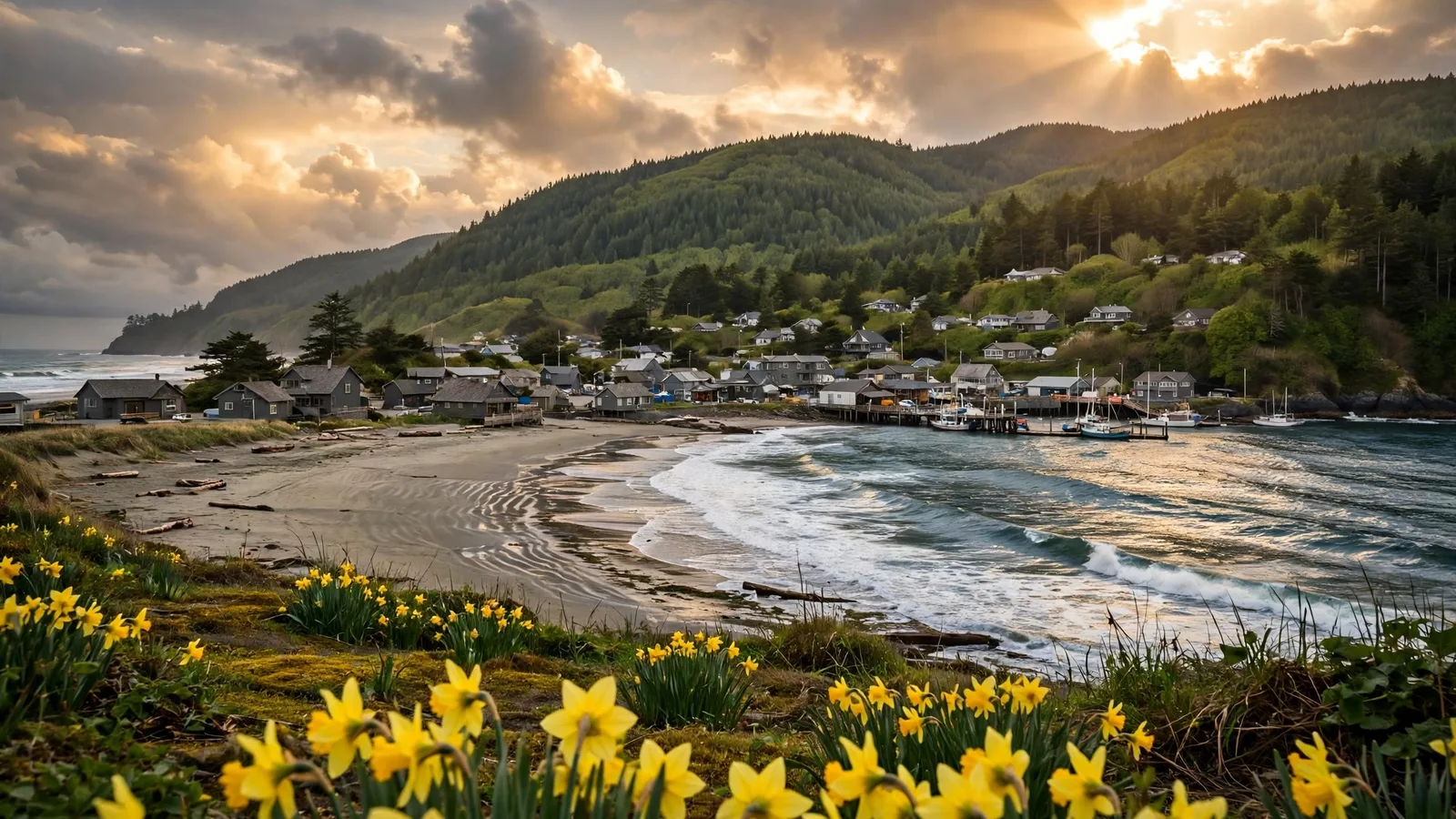
The most loved weather feature in Brookings has a name: the Chetco effect, also called the Brookings effect. It is the reason daffodils bloom here in February and why a winter day can suddenly feel like spring.
Here is how it works. Air flows down the Chetco River valley from the mountains toward the sea. As the air sinks, it is squeezed, and squeezed air warms up — the same physics that makes a bicycle pump feel warm. By the time this air reaches Brookings, it arrives as a warm, dry wind. Temperatures can jump to 70–80°F (21–27°C) even in the middle of winter, while towns up the coast stay gray and cold.
The effect works in summer too, and then it can bring real heat. Brookings’ all-time record high, about 108°F (42°C), was set in July 2008 during a strong Chetco effect event. These warm spells usually last a few days, then the cool ocean air returns. Visitors who arrive during a Chetco spell often say Brookings feels like California. Visitors who arrive a week later may need a jacket. Both are right — that is the charm and the trick of this coast.
Brookings Weather by Season
Every season in Brookings has its own personality. This table gives the general pattern, and the sections below add the detail.
| Season | Daytime highs | Nighttime lows | Rain | What it feels like |
|---|---|---|---|---|
| Spring (Mar–May) | 58–65°F (14–18°C) | Low 40s°F (5–7°C) | Decreasing | Fresh, green, changeable |
| Summer (Jun–Aug) | 65–72°F (18–22°C) | Low 50s°F (10–12°C) | Very little | Cool, dry, some fog |
| Fall (Sep–Nov) | 62–70°F (17–21°C) | Mid 40s°F (6–8°C) | Increasing | Warm start, wet finish |
| Winter (Dec–Feb) | 53–58°F (12–14°C) | Around 40°F (4–6°C) | Heavy | Mild, stormy, green |
Spring in Brookings
Spring arrives early and gently. Thanks to the Chetco effect, some flowers open in February, and by March the hills are bright green. Rain falls less often as the season goes on, and sunny breaks grow longer. Temperatures are mild — a light jacket handles most days. It is a fine season for hiking and waterfalls, because the rivers run full and the crowds have not arrived.
Summer in Brookings
Summer is the dry season. July and August each average less than an inch of rain, and many weeks pass with none at all. Days are cool by most standards — the upper 60s to low 70s Fahrenheit — because the ocean breeze never stops working. Mornings can start with fog along the beaches while the hills above town are already sunny. Pack layers: a Brookings summer evening feels like early fall in many states. Occasionally the Chetco effect flips the pattern and sends a few hot days, but they pass quickly.
Fall in Brookings
Early fall is the secret season. September often brings some of the warmest, calmest days of the year, with the summer fog mostly gone. The ocean is at its warmest, the light is golden, and the beaches are quiet. Then, usually in late October or November, the rains return. Storms roll in from the Pacific, the rivers rise, and the long wet season begins.
Winter in Brookings
Winter is the rainy season, but it is a mild one. Daytime highs sit in the mid 50s Fahrenheit, and nights rarely fall to freezing. Rain comes in strong storms, sometimes very heavy — the wettest year on record, 1996, brought nearly 124 inches. But winter here is not endless gray. The rain is often broken by days or even a week of warm, sunny weather when the Chetco effect takes over. Snow is a rare treat, averaging less than an inch a year. For storm watching — standing safe and warm while huge Pacific waves crash — winter in Brookings is dramatic and beautiful.
Rain in Brookings: What to Expect
Rain defines the Brookings year, so it deserves a clear picture. Almost all of it falls between October and April. Summers are nearly dry. Winters can be extremely wet, and totals vary a lot from year to year and from the beach to the hills a few miles inland, where totals climb much higher.
| Month group | Rain pattern | Notes |
|---|---|---|
| Nov–Feb | Heaviest rain | Pacific storms, rising rivers, storm watching |
| Mar–Apr | Moderate, easing | Longer sunny breaks, green hills |
| May–Jun | Light | Drying trails, mild days |
| Jul–Aug | Driest (under 1 inch each) | Fog some mornings, best beach weather |
| Sep–Oct | Light, then rising | Warm early fall; rains return late Oct |
The practical lesson: in Brookings you do not plan around avoiding rain in winter — you dress for it. A waterproof jacket beats an umbrella in the coastal wind. In summer, you can plan outdoor days with confidence, but you still bring the jacket for the cool evenings.
What to Wear and Pack for Brookings
Packing for Brookings is about layers, not seasons. Bring a waterproof outer layer in every month of the year. Add a warm fleece for mornings and evenings, even in July. Choose shoes that can handle wet trails and sandy beaches. Sunglasses and sunscreen still matter — when the sun comes out between storms, the coastal light is strong, and the Chetco effect can produce a beach day in February. Leave the heavy winter coat at home; you will almost never need it. And if you are visiting in summer, do not be fooled by the map: this is the cool part of the coast, and shorts alone will leave you chilly by sunset.
Best Time to Visit Brookings, OR
The best time depends on what you want. For warm, dry beach weather, choose July through September, with September the local favorite for its warmth and calm. For flowers, waterfalls, and fewer people, choose April, May, or early June. For storm watching and dramatic seas, choose December through February, and book a room with an ocean view. For the best mix of mild weather and low prices, the shoulder weeks of fall — late September into October, before the rains settle in — are hard to beat. Whenever you come, check the forecast a few days ahead, because the Chetco effect can turn a cool week into a warm one with little warning.
Frequently Asked Questions
Does it snow in Brookings, Oregon?
Almost never. Brookings averages well under an inch of snow per year, and many winters see none at all. The ocean keeps temperatures above freezing on most winter nights. A light dusting is a local event people photograph and talk about for weeks.
What is the Chetco effect?
It is a warm, dry wind that flows down the Chetco River valley from the mountains. As the air sinks toward the coast it is compressed and warms up, sometimes lifting Brookings into the 70s or 80s Fahrenheit while the rest of the coast stays cool. It can happen in any month, even in mid-winter.
How hot does Brookings get in summer?
Usually not hot at all. Most summer days reach only the upper 60s or low 70s Fahrenheit (about 18–22°C). A few days each year climb higher when the Chetco effect blows, and the all-time record is about 108°F (42°C) from July 2008 — but that is the exception, not the rule.
What is the rainiest month in Brookings?
The heart of winter — December and January — brings the heaviest rain, when Pacific storms arrive one after another. Rain totals for the whole wet season vary widely from year to year, so a given winter can feel much wetter or much kinder than average.
Is Brookings warmer than the rest of the Oregon coast?
Yes, often. The Chetco effect and the shelter of the mountains make Brookings — the “Banana Belt” — warmer and sunnier than most Oregon coastal towns, especially in winter. Towns even a short drive north can be cooler and grayer on the same day.
What is the best month to visit Brookings?
September is the favorite for many people: warm days, little fog, calm seas, and smaller crowds. If you want the driest weather, July and August are the safest bet. If you want drama, come in winter and watch the storms.
Conclusion
The weather in Brookings, OR is a study in mild extremes: very wet winters that are never truly cold, dry summers that are never truly hot, and a warm wind that can rewrite the forecast in any month. Plan for rain from November to April, dress in layers all year, and time your visit for September if you want the coast at its golden best. Understanding the local climate before you go turns surprises into pleasures — a foggy morning becomes a quiet beach walk, a Chetco day becomes a gift of summer in February, and even a winter storm becomes the show you came to see on Oregon’s Banana Belt.