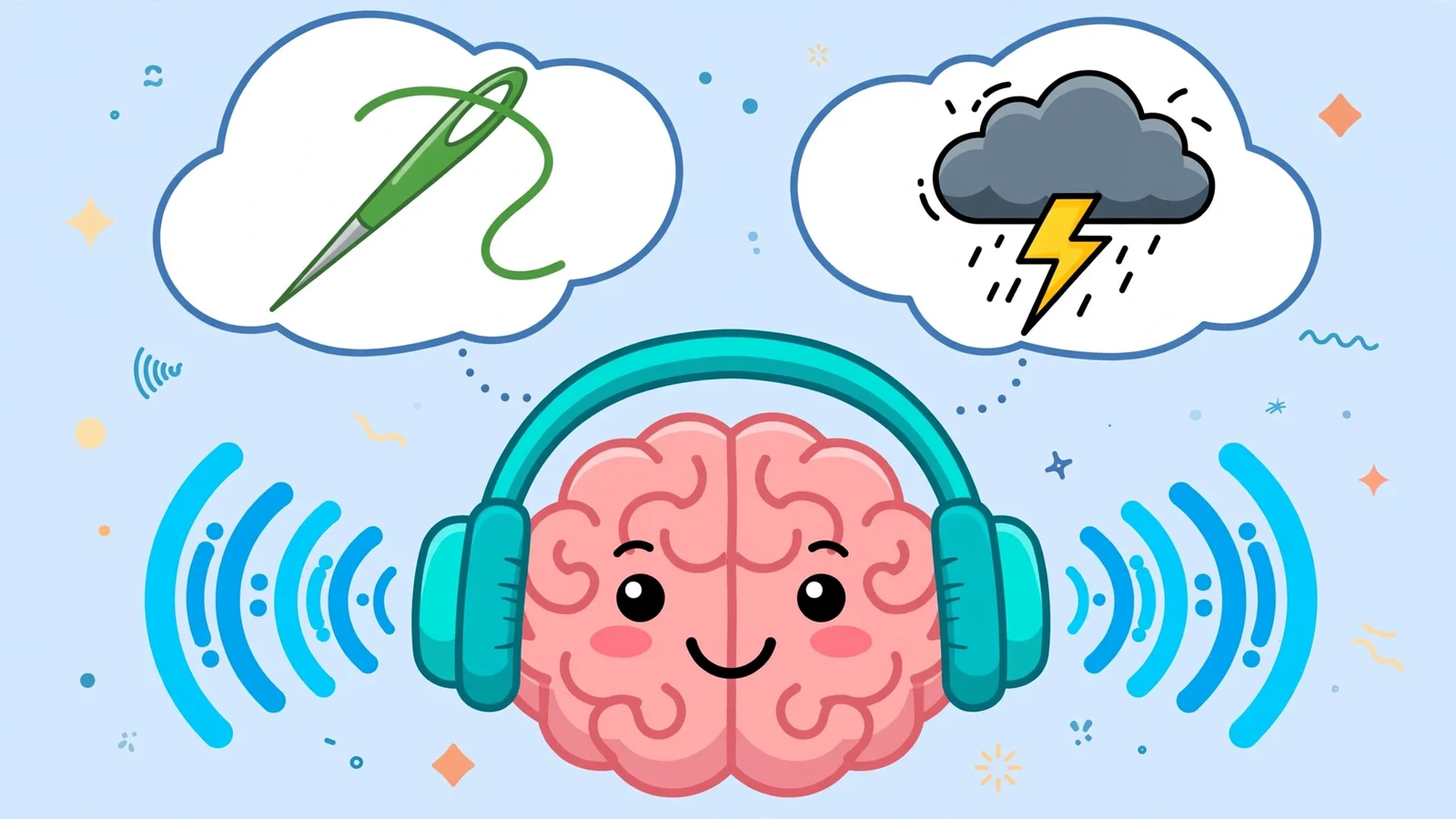
Play the famous sound clip and ask a room full of people what they hear. Half will swear the voice says “brainstorm,” and the other half will swear it says “green needle.” Both groups are honest, and both are hearing the exact same sound. The green needle or brainstorm clip is a listening illusion that became famous in 2018, and it shows something amazing: your brain does not just hear sounds, it guesses words. What you expect to hear changes what you actually hear. This guide explains how the illusion works, why your brain picks one word over the other, and how you can flip between the two words on purpose.
Quick Answer: Green Needle or Brainstorm?
Neither answer is wrong. The clip plays one recorded sound, and your brain matches it to the word you are expecting. If you read or think “green needle” before listening, you will hear “green needle.” If you think “brainstorm,” you will hear “brainstorm.” The sound sits between the two phrases, so your expectation tips the balance. Try it yourself: listen once while reading “green needle,” then listen again while reading “brainstorm.” Most people can hear both words from the same clip, one at a time, just by changing what they expect.
Where Did the Green Needle or Brainstorm Clip Come From?
The clip spread across social media in May 2018, in the same season as the famous “Yanny or Laurel” sound debate. The voice in the clip comes from a toy based on the cartoon show Ben 10. The toy character’s real line is “brainstorm,” which is also the name of one of the hero’s alien forms in the show. A short video showed the toy speaking, with the words “green needle” and “brainstorm” written on screen, and viewers were amazed to find that the word they heard matched the word they were reading or thinking about.
From there, the clip traveled fast. People shared it at school, at work, and at family dinners, and everyone enjoyed the small shock of hearing a word change inside their own head. News sites and science writers picked it up because it is a perfect, friendly example of how hearing really works. Unlike a trick recording with two hidden tracks, this clip holds just one sound. The second word is created by your brain.
Why Does Your Brain Hear Green Needle or Brainstorm?
Your ears collect sound waves, but your brain does the real work of turning those waves into words. Speech sounds are messy. People mumble, rooms echo, and speakers talk fast, so the brain cannot wait for perfect information. Instead, it guesses. It takes the sounds it received and quickly matches them to the closest word or phrase it knows, using clues like context, lip movement, and what you expected to hear. Scientists call this top-down processing: knowledge in your head flows down and shapes what your senses report.
The green needle or brainstorm sound is a perfect trap for this system because the two phrases share a similar pattern of sounds. Say them slowly. “Green needle” and “brainstorm” both have two beats, a strong middle sound, and soft ending sounds. The recorded toy voice is a little robotic and unclear, which removes the small details that would normally settle the question. With the details missing, your brain fills the gap with whichever phrase is already active in your mind. Read “green needle,” and the brain builds green needle. Read “brainstorm,” and the same sound becomes brainstorm.
| What You Think First | What You Hear | Why |
|---|---|---|
| Green needle | “Green needle” | Your brain expects two soft, quick words |
| Brainstorm | “Brainstorm” | Your brain expects one strong, heavy word |
| Nothing (first listen) | Either one | Your brain picks the closest match it can find |
How to Hear Both Words: A Simple Test
You can prove the illusion to yourself in less than a minute. Follow these steps and pay close attention to the exact moment the word seems to change.
First, play the clip while looking at the words “green needle.” Listen two or three times. Most people clearly hear a voice say “green needle.” Next, play the same clip while looking at the word “brainstorm.” Within a play or two, the voice will seem to say “brainstorm” instead. Nothing about the sound changed. Only the words in front of your eyes changed, and your brain followed them.
If you have trouble flipping, try thinking the word silently right before you press play, or mouth the word as you listen. Another trick is to listen with a friend who hears the opposite word, and trade instructions. Once you flip the sound for the first time, you can usually switch back and forth whenever you like. The moment the word changes inside the same sound feels strange and fun, and it is the clearest proof that hearing is an active job your brain performs, not a simple recording.
Green Needle, Brainstorm, and Other Sound Illusions
This illusion belongs to a small family of famous sound tricks. The best known is “Yanny or Laurel,” a 2018 clip where people heard two completely different names in one recording. In that case, the recording held both high and low sound patterns, and listeners leaned on different parts of it depending on their ears, age, and speakers. The green needle or brainstorm clip works a little differently: expectation, more than ear or equipment, does most of the work.
An older cousin is the McGurk effect, where what you see changes what you hear. In videos of that effect, a person mouths one sound while the audio plays another, and your brain invents a third sound in the middle. All three illusions teach the same lesson in different ways. Your senses give your brain rough material, and your brain builds the finished experience using memory, sight, and expectation as tools.
| Illusion | What Changes the Result | What You Learn |
|---|---|---|
| Green needle or brainstorm | The word you expect or read | Expectation shapes hearing |
| Yanny or Laurel | Sound frequencies and your ears | Listeners use different parts of a sound |
| McGurk effect | The mouth shapes you see | Sight shapes hearing |
What This Illusion Teaches Us About Listening
The green needle or brainstorm clip is fun, but it also carries a serious lesson. In daily life, we trust our ears completely. We argue about what a person said in a meeting, a game, or a family talk, sure that our memory is a recording. This illusion shows that memory is not a recording at all. Two honest people can hear the same words and walk away with different versions, both fully certain they are right.
That lesson can make us better listeners. When a disagreement starts with “that is not what you said,” it may help to slow down, repeat the words, or write them down. Teachers, doctors, pilots, and customer service workers all deal with sound misunderstandings, which is why important instructions in those jobs are often repeated back and confirmed in writing. A ten-second toy clip, shared as a joke, turns out to be a neat reminder to listen with a little humility.
Why Some People Cannot Flip the Word at First
If you try the test and hear only one word no matter what you read, do not worry. You are not broken, and neither is the clip. Some listeners lock onto one interpretation very strongly, especially if they heard the clip many times in one form before anyone showed them the trick. Hearing also differs from person to person: the toy voice is robotic, and small differences in ears, speakers, and room noise can push your brain toward one match and hold it there.
A few extra tricks can loosen the lock. Turn the volume down a little, because a softer sound gives your brain less detail to fight over. Look away from the screen and only think the other word, hard, right before pressing play. Ask a friend who hears the opposite word to say their word out loud first; hearing a real voice speak “green needle” can prime your brain before the toy speaks. Most people flip within a few tries using one of these methods, and the first flip is the memorable one. After that, your brain keeps both doors open, and switching becomes a party trick you can perform on demand.
There is a deeper point hiding under the fun. If a single unclear sound can split a room, imagine how easily a mumbled sentence in a noisy café can split two friends. The clip trains a small but valuable habit: hold your hearing lightly, and check before you argue.
Try the Clip with Family, Friends, or Students
This illusion makes a great five-minute activity. Send the clip to a family group chat without explaining it, and ask everyone to reply with the word they hear. The replies will split, and the friendly argument that follows is the best introduction to the science. Then share the reading trick: play it again while everyone reads “green needle,” and again while everyone reads “brainstorm.” Watch how many people flip, and enjoy the moment the room realizes the sound never changed at all.
Teachers like the clip because it opens a bigger conversation in simple words. Students can discuss why witnesses of the same event sometimes give different reports, why instructions at work are written down, and why “I am sure I heard it” is not always proof. A toy’s unclear voice turns into a lesson about brains, memory, and careful listening, all without any special equipment. Just keep the tone light: nobody’s ears are wrong, and that is exactly the point.
Frequently Asked Questions
Which word is the clip really saying?
The toy’s recorded line is “brainstorm,” the name of a Ben 10 alien character. However, the sound is unclear enough that your brain can honestly hear “green needle” instead. Both experiences are real, even though only one word was recorded.
Why can I hear green needle but my friend hears brainstorm?
Because your brains are using different expectations to fill in an unclear sound. Age, hearing, speakers or headphones, and the word you saw or thought about first can all push the result one way or the other.
Can everyone learn to hear both words?
Most people can, with a little practice. Read one phrase while you listen, then switch to the other phrase and listen again. Once your brain learns both patterns, flipping between them usually becomes easy.
Is the green needle or brainstorm clip two sounds mixed together?
No. The clip contains one recorded sound. Unlike some illusions that layer high and low sounds, this one depends on your brain choosing which known phrase the single sound matches best.
What is the science idea behind this illusion?
The idea is called top-down processing. Your brain uses knowledge, memory, and expectation to interpret the signals from your senses. When a sound is unclear, expectation fills the missing parts, and you hear the word you were prepared to hear.
Is this the same as Yanny or Laurel?
They are close cousins. Both are one recording that people hear in two different ways. Yanny or Laurel depends more on sound frequencies and hearing differences, while green needle or brainstorm depends more on the word you expect before listening.
Conclusion
One short sound, two different words, and a whole room of people who cannot agree. That is the charm ofbrainstorm versus green needle: it proves that hearing is something your brain builds, not something your ears simply record. The toy really said “brainstorm”, yet your mind can shape the same sound into “green needle” just by expecting it. Try the reading test with your family and watch the exact moment their word flips. You will laugh, and you will also leave with a lasting lesson: listen carefully, stay humble about what you heard, and when it truly matters, ask the speaker to say it one more time.