Gas pain usually passes within a few hours, but appendicitis pain gets worse and needs fast medical care. That is the key difference in the “gas or appendicitis” question. Gas is a normal part of digestion and almost never dangerous. Appendicitis is an inflamed appendix, and it can become an emergency if you wait too long. The two pains can feel similar at first, which is why so many people search for this topic when their stomach hurts. In this guide, you will learn where each pain sits, how each pain behaves, the warning signs that mean “go to the hospital now,” and simple steps to take while you decide.
Quick Answer
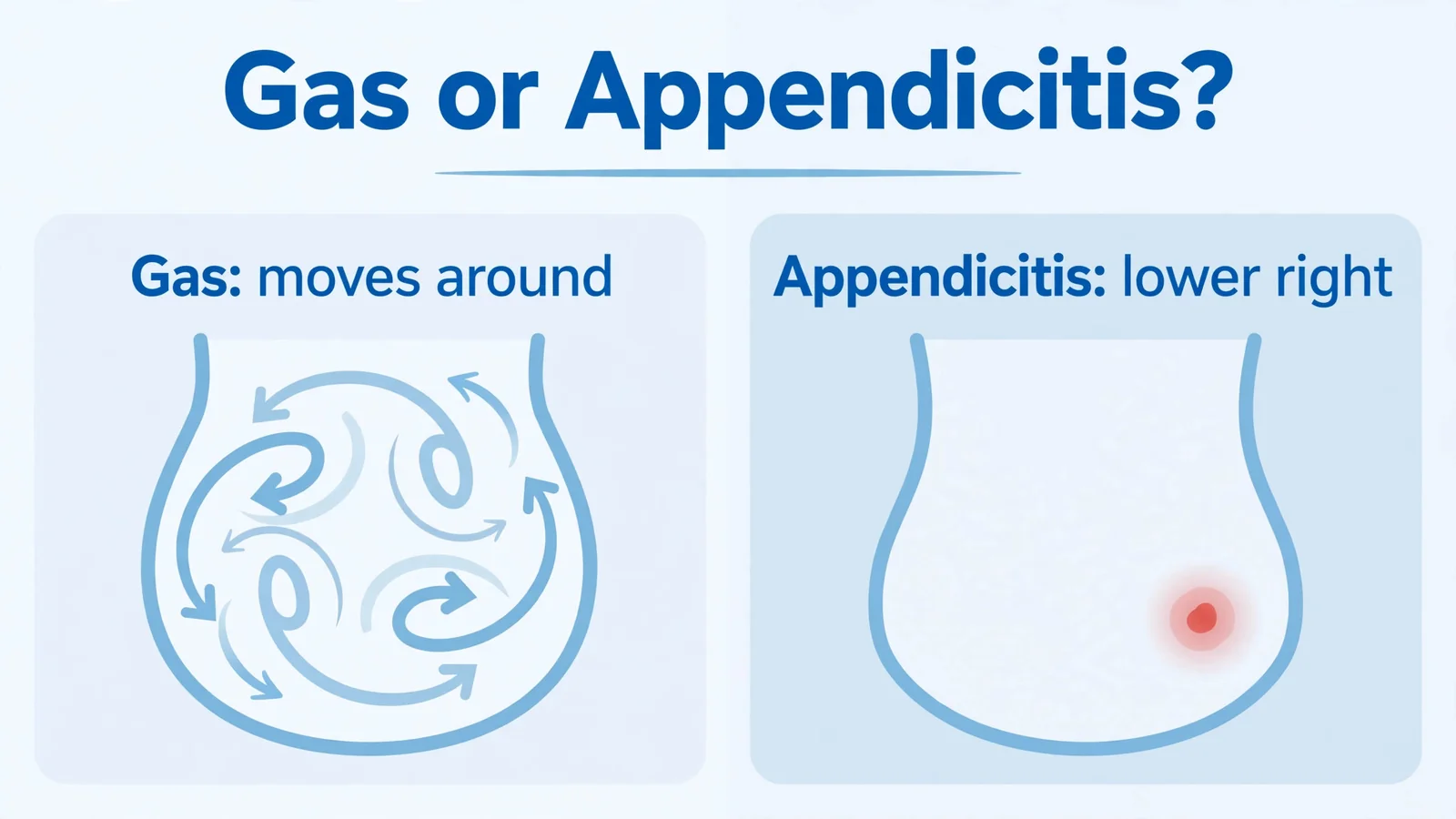
Here is the short answer. Gas pain moves around the belly, comes and goes in waves, and often gets better after you pass gas, burp, or use the bathroom. It is usually linked to food, swallowing air, or constipation. Appendicitis pain usually starts near the belly button, then moves to the lower right side of the belly and stays there. It grows stronger over hours, hurts more when you move, cough, or press and release the area, and often comes with fever, nausea, and loss of appetite. If your pain is steady, getting worse, and locked into the lower right side, treat it as an emergency and get medical help right away.
What Gas Pain Feels Like
Gas forms when your body breaks down food in the stomach and intestines. Some air also enters when you eat fast, drink soda, chew gum, or talk while eating. This gas can stretch the walls of your intestines, and that stretching is what hurts.
Gas pain is usually sharp or crampy, but it shifts from place to place. You may feel it high under the ribs, then low on the left, then in the middle. It often comes with bloating, a full feeling, burping, and passing gas. The biggest clue is relief. After gas moves out, the pain fades. Walking around can help gas move, and many people feel fully better within a few hours.
What Appendicitis Pain Feels Like
The appendix is a small finger-shaped pouch attached to the large intestine, low on the right side of the belly. Appendicitis means the appendix is swollen and infected, often because something blocks it inside. This is a medical emergency because a swollen appendix can burst.
Appendicitis pain has a famous pattern. It often begins as a dull ache around or above the belly button. Over the next several hours, the pain travels to the lower right side, to a spot doctors call McBurney’s point, between the belly button and the right hip bone. There, the pain becomes sharp and steady. It does not move around. It gets worse when you walk, cough, sneeze, or ride over bumps in a car. Pressing the area gently and then letting go quickly can hurt even more. This is called rebound tenderness, and doctors look for it during an exam.
Gas vs Appendicitis: Side-by-Side Comparison
| Feature | Gas Pain | Appendicitis Pain |
|---|---|---|
| Where it hurts | Moves around the whole belly | Settles in the lower right side |
| How it starts | Often after eating | Often starts near the belly button |
| How it changes | Comes and goes in waves | Grows steady and stronger over hours |
| Passing gas or burping | Usually brings relief | Brings no relief |
| Fever | Rare | Common, often with chills |
| Appetite | Mostly normal | Usually lost; food sounds unpleasant |
| Nausea and vomiting | Sometimes mild | Common, usually after pain starts |
| Movement | Walking often helps | Walking, coughing, and bumps make it worse |
| How long it lasts | Minutes to a few hours | Keeps going and gets worse past 12–24 hours |
This table gives you the pattern, but remember one rule. Only a doctor can confirm appendicitis, often with a physical exam, blood tests, and sometimes an ultrasound or CT scan. If the signs point to appendicitis, do not wait at home to see what happens.
Warning Signs: When to Get Emergency Help
Call emergency services or go to the hospital right away if you have any of these signs. Pain that settles in the lower right belly and keeps getting worse. Pain that hurts when you walk, cough, or jump. Fever above 100.4°F (38°C) together with belly pain. Vomiting that will not stop. A belly that feels hard, swollen, or very tender to touch. Pain so strong that you cannot stand up straight.
Children need extra care because they cannot always describe pain well. A child who refuses food, curls up holding the right side, cries when the belly is touched, or has belly pain with fever should be seen by a doctor quickly. Pregnant women and older adults can have appendicitis pain in unusual places, so any strong, lasting belly pain in these groups deserves a fast medical check.
Other Causes of Belly Pain to Know About
Not every belly pain is gas or appendicitis. Constipation can cause cramping on the left side or across the lower belly, and it often improves after a bowel movement. Food poisoning and stomach flu usually bring diarrhea, vomiting, and cramps across the whole belly. Gallstones cause pain in the upper right belly, often after a fatty meal. Kidney stones cause severe pain in the side and back that comes in waves.
Women have extra possible causes, such as ovulation pain, ovarian cysts, or pregnancy-related problems, which can also hurt on the lower right side. This is one more reason why strong or lasting belly pain should be checked in person. A simple guide can point you in the right direction, but it cannot replace a doctor’s exam.
When Gas Pain Is Not Just Gas
Most gas pain is harmless, but sometimes pain that starts like gas is an early sign of something else. Pay attention if “gas” pain keeps coming back in the same spot, lasts longer than a day, or feels different from your normal pattern. Pain that wakes you from sleep is also worth checking, because simple gas rarely does that.
See a doctor soon, even without emergency signs, if you notice belly pain together with blood in your stool, unexplained weight loss, constant bloating that does not go away, or repeated vomiting. These signs can point to stomach, bowel, or gallbladder problems that need tests. Keeping a short note of when the pain comes, what you ate, and where it hurts can help your doctor find the cause much faster.
Simple Tests Doctors Use
Doctors use a few simple checks to tell gas from appendicitis. They will ask where the pain started and where it is now, because the movement of pain from the center to the lower right is a strong clue. They will press gently on different parts of the belly and watch your reaction. They may ask you to cough, walk, or hop, because appendicitis pain gets worse with movement.
A blood test can show if your white blood cell count is high, which suggests infection. A urine test can rule out a bladder or kidney problem. In many cases, an ultrasound or CT scan gives a clear picture of the appendix. You do not need to test yourself at home. In fact, pressing hard on a sore belly again and again is not a good idea. If you are unsure, the safest test is a visit to a doctor or emergency room.
What to Do While You Decide
If your pain is mild, moves around, and you suspect gas, try these gentle steps. Walk around the room for a few minutes, because movement helps gas travel. Sip warm water slowly. Loosen tight clothing around your waist. A warm towel or heating pad on the belly can relax the muscles. Avoid lying flat right after a big meal.
If appendicitis is possible, the rules change. Do not eat or drink, because surgery may be needed and an empty stomach is safer. Do not take strong pain medicine or laxatives before a doctor sees you, because they can hide important symptoms or make things worse. Do not press and poke the sore spot again and again. Instead, note when the pain started, where it hurts most, and whether you have fever or vomiting. This information helps the medical team act fast.
| Situation | Safe Action |
|---|---|
| Mild moving pain after a heavy meal | Walk, sip warm water, wait and watch for 1–2 hours |
| Pain improves after passing gas | Likely gas; rest and eat lightly |
| Steady pain in lower right belly, getting worse | Go to the emergency room now |
| Belly pain with fever and vomiting | Get medical help the same day, right away |
| Pain so strong you cannot stand straight | Call emergency services immediately |
Common Mistakes People Make
The first mistake is waiting too long with appendicitis pain. Some people wait two or three days, hoping it is only gas. A burst appendix is far more dangerous than an early hospital visit, so when in doubt, get checked. The second mistake is taking laxatives or strong herbal cleaners for belly pain. These can strain an inflamed appendix and raise the risk of it bursting.
The third mistake is using a heating pad on possible appendicitis pain. Heat can increase inflammation and hide the true picture. The fourth mistake is eating a big meal “to test” the pain. Food will not clear the confusion, and it can delay surgery if doctors decide you need it. The fifth mistake is trusting an online quiz over your own body. If the pain feels wrong, strong, and different from normal gas, believe your body and get help.
FAQs
1. How long does gas pain last compared to appendicitis?
Gas pain usually lasts a few minutes to a few hours and fades after you pass gas or use the bathroom. Appendicitis pain does not fade. It builds over 12 to 24 hours and keeps getting worse.
2. Can gas pain be on the lower right side too?
Yes, gas can collect almost anywhere in the intestines, even the lower right side. The difference is behavior. Gas pain shifts, comes in waves, and eases after gas passes. Appendicitis pain stays fixed in one spot and grows stronger.
3. Does appendicitis always start at the belly button?
Not always, but very often it does. The classic pattern is dull pain near the belly button first, then sharper pain in the lower right side within a day. Children, pregnant women, and older adults may feel the pain in different places.
4. Should I take pain medicine for belly pain at home?
For mild pain that feels like normal gas, a simple pain reliever is usually fine. If appendicitis is possible, avoid strong pain medicine, laxatives, and herbal cleaners until a doctor checks you, because they can mask symptoms or cause harm.
5. What happens if appendicitis is not treated?
An untreated inflamed appendix can burst, usually within 48 to 72 hours of symptoms starting. A burst appendix spreads infection inside the belly, which can become life-threatening. This is why fast treatment matters so much.
6. How do doctors treat appendicitis?
The usual treatment is surgery to remove the appendix, often done through small cuts with a camera, plus antibiotics. In some early cases, doctors may try antibiotics alone, but surgery is still the most common and reliable treatment.
Conclusion
The gas or appendicitis question comes down to pattern. Gas pain moves, waves, and leaves after gas passes. Appendicitis pain settles in the lower right side, stays there, and grows stronger hour by hour, often with fever, nausea, and a lost appetite. You now know the main signs, the simple checks doctors use, and the mistakes to avoid.
Still, no guide can examine your belly, and even doctors use scans and blood tests to be sure. So follow the safest rule of all. If the pain is steady, one-sided, and getting worse, do not wait and wonder. Get medical help right away, because with appendicitis, fast care is the best care.