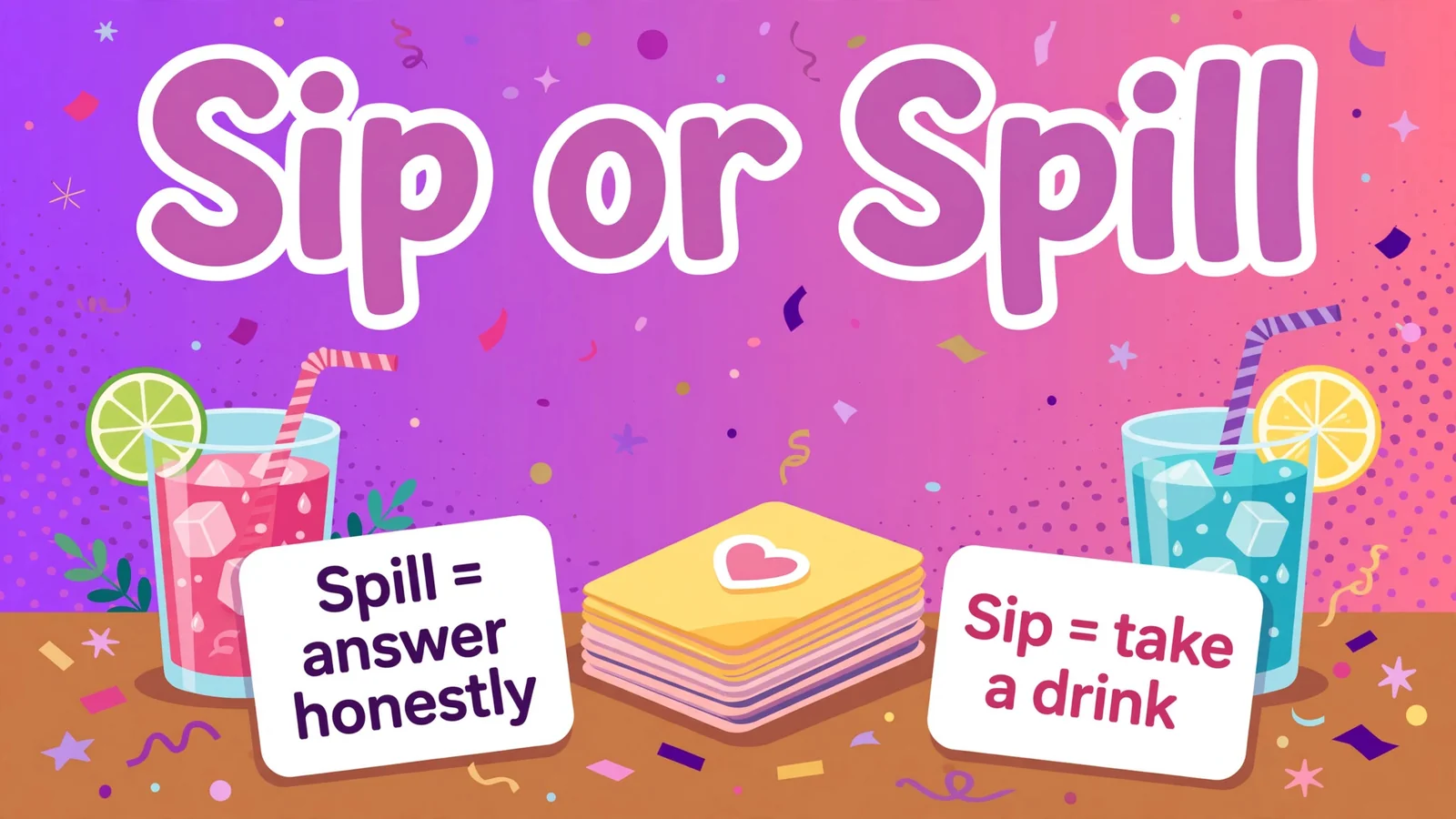
Sip or spill is a question game where you must either answer honestly or take a sip of your drink instead. That is the whole idea, and it is why the game has become so popular at parties, on podcasts, and in online videos. One person reads a bold or funny question. The player then makes a choice: “spill” the truth by answering, or “sip” a drink and stay silent. The game is simple, needs no board or cards, and always creates laughter and surprises. In this guide, you will learn the exact meaning of sip or spill, how to play step by step, the rules, great question ideas, and tips to keep the game fun and safe for everyone.
Quick Answer
Sip or spill works like this. A question is asked out loud. If you are willing to answer it honestly, you “spill,” which means you share the truth, like spilling a secret. If you do not want to answer, you “sip,” which means you take a drink and skip the question. There is no winner or loser in the classic version. The goal is fun, honesty, and good stories. You can play with juice, soda, coffee, or any drink you like, so the game works for teens, adults, and family game nights too.
What Does Sip or Spill Mean?
The two key words come from everyday slang. “Spill” means to reveal information, the same idea as the popular phrase “spill the tea,” which means sharing gossip or secrets. “Sip” means taking a small drink, and in this game it is the price you pay for keeping your secret safe.
Think of every question as a trade. Your answer costs you a secret. Your sip costs you a drink. Players choose which price they would rather pay, and that choice is what makes the game exciting. A question that looks easy can suddenly feel risky when all your friends are watching and waiting for your answer.
How to Play Sip or Spill: Step by Step
The game is easy to set up. You need at least two players, a drink for each person, and a list of fun questions. Sit in a circle or around a table so everyone can hear each question clearly.
First, choose who asks the first question. The asker reads one question to one player, or to the whole group if you prefer that style. Second, the player decides: spill and answer the question honestly, or sip and take a drink without answering. Third, the group reacts, laughs, and maybe asks one follow-up question if the player agrees. Fourth, move to the next player and repeat. The game ends whenever the group feels ready, or when the question list runs out. Many groups play until everyone has answered or sipped at least five questions each.
The Basic Rules of the Game
Good rules keep the game fun and fair. A player who chooses to sip must actually take a proper sip, not a tiny fake one. A player who chooses to spill must answer honestly, not with a joke answer that hides the truth. Nobody may force a player to answer. The sip option exists to protect every player, and the group must respect it every time.
Questions should be fun, not cruel. Avoid questions about serious trauma, private family problems, or anything that could truly hurt someone. If a question feels too personal, the player can always sip, and a good group will simply move on. Many groups also add a limit, such as three sips in a row, after which the player must answer the next question or take a funny dare instead.
| Choice | What It Means | What the Player Does | Best Used When |
|---|---|---|---|
| Spill | Share the truth | Answers the question honestly | The question is fun and safe to answer |
| Sip | Protect the secret | Takes a drink and says nothing | The question is too personal or embarrassing |
Sip or Spill Questions to Get You Started
Great questions are the heart of this game. The best questions are a little bold, a little funny, and safe for friends to answer. Here are ideas in three levels that groups often use.
For light and funny rounds, try questions like these. What is the most embarrassing song on your playlist? Have you ever pretended to like a gift you actually hated? What is the strangest food you have ever eaten? Have you ever stalked an ex on social media? What is a silly fear you still have as an adult?
For medium rounds with close friends, go a little deeper. What is the biggest lie you have ever told your parents? Who in this group would you call first in an emergency, and why? What is the most money you have ever spent on something stupid? Have you ever read someone else’s messages without asking? What is one secret talent nobody here knows about?
For bold rounds, only with friends who truly trust each other, questions can touch on crushes, first kisses, biggest regrets, and most awkward dates. Always remind players that the sip is there for them. A bold question is fun only when the player feels free to skip it.
Sip or Spill vs Truth or Dare
People often compare sip or spill with truth or dare, but the games are different in one big way. In truth or dare, refusing the truth means doing a dare, which can be wild or physical. In sip or spill, refusing the truth only means taking a drink. This makes sip or spill calmer, safer, and better for mixed groups, office parties, and online shows.
| Feature | Sip or Spill | Truth or Dare |
|---|---|---|
| Your two choices | Answer the question or take a sip | Answer the question or do a dare |
| What you risk | A secret or a drink | A secret or an action, sometimes embarrassing |
| Equipment needed | Drinks and questions only | Nothing, but dare ideas help |
| Best setting | Parties, podcasts, videos, game nights | Close friends, sleepovers, camps |
| Pressure level | Low, because sipping is easy | Higher, because dares can be hard to refuse |
Why Sip or Spill Became So Popular Online
Sip or spill became famous because it works perfectly in videos and podcasts. Hosts ask guests spicy questions, and the audience loves watching the guest struggle between answering and sipping. The moment of choice creates natural drama without any fighting or meanness. Viewers also play along at home, asking themselves what they would do with each question.
The game also fits social media well. Short clips of funny answers spread quickly, and question lists get shared again and again. Many creators now have their own versions, like “sip or spill: ex edition” or “sip or spill: work edition.” The format is flexible, and that is a big reason for its long life online.
Fun Variations of Sip or Spill
Once your group knows the basic game, variations keep it fresh. In “team sip or spill,” two teams take turns, and a team must agree together whether to sip or spill, which creates funny debates. In “points edition,” every spill earns one point and every sip earns none, and the player with the most points at the end wins a small prize. This version adds gentle competition for groups that like a winner.
In “couples edition,” partners ask each other questions about their relationship, which can be sweet, funny, and sometimes surprising. In “online edition,” the host reads questions sent by viewers, and guests sip or spill live, which is why the format is so popular on streams. You can also play a “no-sip round,” where one special question near the end must be answered by everyone. Just be careful with that round, and pick a light, kind question for it. Variations work best when the whole group agrees on the rules before the round begins.
Tips for a Fun and Safe Game
Set the mood before you start. Agree on the question level — light, medium, or bold — so nobody is surprised. Let every player keep a full drink nearby, and remember that the drink does not have to be alcohol. Juice, soda, milkshakes, and coffee all work fine, and non-alcoholic drinks make the game open to everyone.
Protect feelings. If someone sips, do not beg, tease, or guess the answer out loud. That guessing breaks trust and can embarrass the player. Keep answers inside the room unless everyone agrees the game is being recorded for fun content. Finally, take breaks. Ten to fifteen questions in a row is plenty before a pause for snacks and normal chat. The game should always feel like a party, never like an interrogation.
Common Mistakes to Avoid
The biggest mistake is asking questions that target one person’s pain, like a bad breakup or a family fight. That turns a fun game into a hurtful one. The second mistake is punishing sips. If players are mocked for sipping, they will feel pushed to share things they wanted to keep private. The third mistake is recording or posting answers without permission. Always ask first.
Another common mistake is letting one person ask all the questions. Rotate the asker so everyone joins in. Also, do not keep score too seriously. Some groups award points for spills, which can be fun, but if points create pressure, drop them. The real prize in sip or spill is a room full of people laughing together.
FAQs
1. What does “spill” mean in sip or spill?
“Spill” means you answer the question honestly and share the truth or secret. It comes from the slang phrase “spill the tea,” which means to share gossip or hidden information with others.
2. What does “sip” mean in the game?
“Sip” means you take a drink instead of answering. It is the safe option that protects your secret. Every player always has the right to sip, and the group must respect that choice.
3. Do you need alcohol to play sip or spill?
No. Any drink works — juice, soda, water, coffee, or a milkshake. The drink is just the small price for skipping a question. Non-alcoholic versions are great for teens and family game nights.
4. How many players do you need for sip or spill?
You need at least two players, but the game is best with three to eight people. Bigger groups can also play by reading each question to the whole group and letting everyone choose to sip or spill.
5. Can you play sip or spill online?
Yes. The game works very well on video calls, podcasts, and live streams. One person hosts and reads questions, and each guest chooses to answer or sip on camera. It is a popular format for interviews and fan shows.
6. What are the best sip or spill questions?
The best questions are funny, a little bold, and safe. Ask about embarrassing moments, silly fears, secret talents, funny lies, and awkward dates. Avoid questions about serious pain or private family matters, and always let players sip freely.
Conclusion
Sip or spill is popular for one simple reason: it turns honesty into a game that everyone can enjoy. You now know the meaning of the game, the step-by-step rules, the difference between sipping and spilling, and question ideas for every comfort level. You also know how it compares with truth or dare, why it spread so fast online, and how to keep it kind and safe. The secret to a great round is not the boldest question. It is a group that laughs, respects every sip, and never forces an answer. So pour your favorite drink, gather your friends, write your questions, and let the game begin. Will you sip, or will you spill?