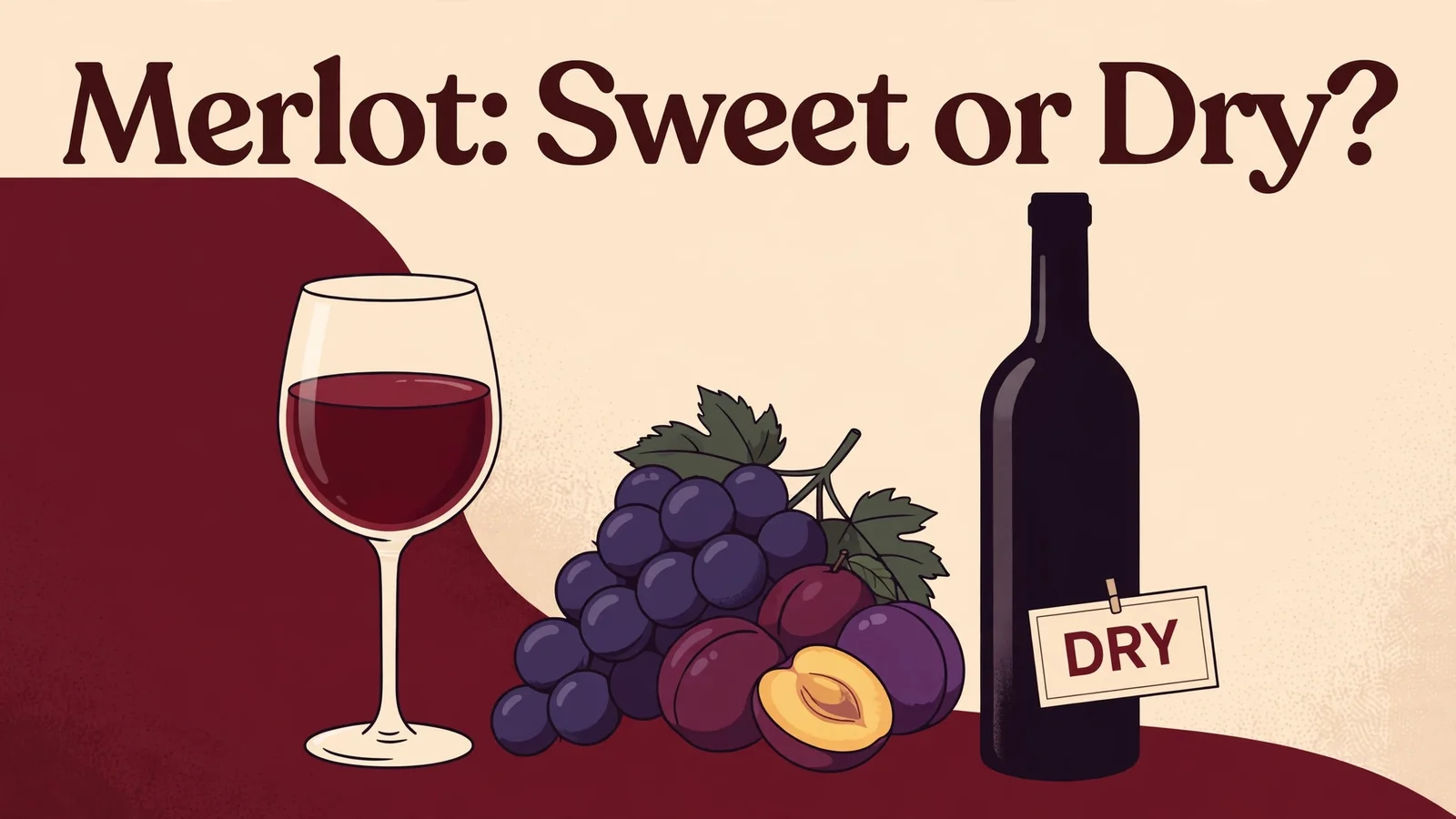
Merlot is a dry red wine, not a sweet one. Almost all the sugar in merlot grapes is turned into alcohol during winemaking, leaving a smooth, fruity red with very little sweetness. That is the direct answer to the “merlot sweet or dry” question. The confusion is understandable: merlot tastes soft and fruity, full of plum and cherry flavors, and fruity is easy to mistake for sweet. But fruit flavor and sugar sweetness are two different things in wine. In this guide, you will learn what dry really means, where merlot sits on the sweetness scale, why it tastes so soft, how it compares with other famous wines, and how to pick the right bottle for your taste.
Quick Answer
Merlot is dry. A typical merlot contains only about 0.5 to 2 grams of residual sugar per liter — far below the level your tongue can even detect as sweet (around 4 to 5 grams per liter and up). Its flavor feels round and fruity because of ripe plum, black cherry, and chocolate notes, plus soft tannins and moderate acidity. If you want a genuinely sweet red wine, look for labels like lambrusco dolce, brachetto, or sweet red blends. If you enjoy fruity flavor without sugar, merlot is one of the friendliest dry reds you can pour.
What Does Dry Mean in Wine?
In wine language, “dry” means the opposite of sweet. A dry wine is one where nearly all the grape sugar has been fermented into alcohol, leaving very little residual sugar behind. A sweet wine keeps a noticeable part of that sugar unfermented, either because the winemaker stopped fermentation early or because the grapes were extremely ripe or concentrated.
This is the single most confusing word in wine, because everyday language uses “dry” for texture (like dry skin) and wine uses it only for sugar. A wine can taste fruity, smooth, and soft and still be completely dry. It can also taste sharp and lean and secretly contain sugar. The only reliable guide is the wine’s style and, when available, its residual sugar numbers — not your first impression of the fruit.
| Sweetness Level | Residual Sugar (grams per liter) | How It Tastes |
|---|---|---|
| Bone dry | Under 1 | No sweetness at all |
| Dry | 1–4 (merlot lives here) | Fruity flavor, no real sweetness |
| Off-dry / medium dry | 4–12 | A gentle hint of sweetness |
| Medium sweet | 12–45 | Clearly sweet |
| Sweet | Over 45 | Dessert-level sweetness |
Where Merlot Sits on the Sweetness Scale
Merlot sits firmly in the dry zone, next to cabernet sauvignon, pinot noir, and syrah. Standard merlot from Bordeaux, California, Chile, or Italy is fermented fully dry. Its alcohol is usually around 13 to 14.5 percent, which is another sign of full fermentation — the yeast ate the sugar and made alcohol instead.
So why do so many people describe merlot as tasting “a little sweet”? Three reasons. First, ripe fruit flavors (plum, cherry, raspberry) remind the brain of sweet foods. Second, merlot’s tannins are soft, so there is little bitterness or dryness on the tongue to balance the fruit. Third, its acidity is moderate — lower-acid wines taste rounder and gentler, which the brain reads as sweeter. The sweetness is an illusion made of fruit, softness, and balance.
| Wine | Sweet or Dry | Typical Flavor Notes |
|---|---|---|
| Merlot | Dry | Plum, black cherry, chocolate, soft tannins |
| Cabernet Sauvignon | Dry | Blackcurrant, cedar, firm tannins |
| Pinot Noir | Dry | Strawberry, cherry, earth, light body |
| Moscato | Sweet | Peach, orange blossom, low alcohol |
| Riesling | Dry to sweet (check label) | Apple, lime, honey in sweet styles |
| Lambrusco (dolce) | Sweet | Red berries, gentle bubbles |
Can Merlot Ever Be Sweet?
Almost never in its classic form — but there are small exceptions worth knowing. A few producers make sweet or late-harvest styles from merlot grapes, and some very cheap “sweet red” blends quietly include merlot among other grapes. These are the exceptions, not the rule, and the label usually announces them with words like sweet, dolce, doux, or dessert.
There is also a middle case: a merlot can be made in a very ripe, jammy style with a touch of residual sugar left on purpose, sometimes called an off-dry or fruit-forward style. These bottles are still far from sweet wines, but they taste softer and rounder than classic dry merlot. If sweetness matters to you, read the back label, check the alcohol level (lower alcohol can hint at leftover sugar in some styles), and when in doubt, ask for a “dry red” by name.
Merlot Flavor Profile: Why It Feels So Friendly
Merlot comes from Bordeaux, France, where it is the most planted red grape, and it is now grown all over the world. Its classic flavors are ripe plum, black cherry, blackberry, and raspberry, often with layers of chocolate, vanilla, bay leaf, or coffee depending on how it was aged. Warmer regions give softer, jammier fruit; cooler regions give fresher, more herbal wines.
Two structural features define merlot’s friendly feel. Its tannins — the compounds that make some red wines feel rough and drying — are naturally soft and smooth. And its acidity sits in the comfortable middle: enough to keep the wine fresh, not enough to make it sharp. Together with rich fruit, this creates the famous “velvety” texture that makes merlot a classic first dry red for new wine drinkers.
Merlot vs Other Wines: A Sweetness Reality Check
Beginners often rank reds by how “sweet” they feel, but the scale they are sensing is really fruitiness plus tannin. From driest-feeling to softest-feeling among common dry reds: cabernet sauvignon feels firmest because of strong tannins; syrah is bold and spicy; malbec is dark and plush; merlot is the softest and roundest; pinot noir is the lightest. All of them are dry in sugar terms.
If you truly want sweetness in your glass, the reliable names are moscato, sweet riesling (look for “spätlese” or simply “sweet” on the label), lambrusco dolce, brachetto d’acqui, ruby port, and most wines labeled “sweet red blend.” If you want fruit without sugar, merlot, malbec, and zinfandel deliver the richest fruit flavors in the dry world. Knowing this difference saves money and disappointment at the wine shelf.
Food Pairing With Merlot
Merlot’s soft tannins and friendly fruit make it one of the easiest reds to pair with food. It loves roast chicken, turkey, pork chops, burgers, pizza, pasta with tomato or mushroom sauces, and mild cheeses. It handles weeknight food gracefully — no special occasion needed.
Because it is dry, merlot works with savory dishes that sweet wines would ruin: sweet wine with a steak tastes like dessert gone wrong, while merlot’s dryness refreshes your mouth between bites. One caution: very spicy dishes can make any red wine taste harsher, and very sweet desserts will make a dry merlot taste sour by contrast. Serve chocolate desserts with something sweeter, and keep the merlot for the main course.
Tips for Buying the Right Bottle
Decide what you actually want before you shop: fruit flavor or real sweetness. If you want dry and fruity, buy a standard merlot from a known region — Bordeaux (especially the Right Bank), Chile’s Central Valley, California, or Washington State — and expect plum-cherry softness. If you want sweet, do not rely on merlot at all; choose a bottle that says sweet on the label.
Read alcohol levels as a rough hint. Classic dry merlot runs about 13 to 14.5 percent. Very low alcohol in a red (under 10 percent) often signals a sweet style. Price is not a sweetness guide, but region and label words are. And if a shop assistant asks whether you like your reds “dry or sweet,” answer with both halves: “dry, but fruity” is the sentence that gets merlot lovers exactly the bottle they want.
Common Mistakes and Myths
The biggest myth is that fruity means sweet. As this guide shows, they are different axes entirely. The second myth is that all red wines are dry and all white wines are sweet — false in both directions; riesling can be sweet or bone dry, and some reds are fully sweet. The third myth is that a smooth, easy wine must contain sugar; merlot’s smoothness comes from soft tannins and ripe fruit, not sugar.
Another mistake is judging sweetness after eating something sweet. A bite of chocolate or dessert first will make any dry wine taste sour and thin. Taste wine on a clean palate, or with savory food, before you judge it. Finally, do not store an opened bottle for a week and then judge the wine — oxidation flattens fruit and changes flavor within a few days.
How to Serve and Store Merlot
A dry merlot shows its best side with a little care. Serve it slightly cool, around 60 to 65°F (16 to 18°C) — cooler than a warm room but never cold from the fridge. Room temperature in modern heated homes is usually too warm, which makes the alcohol taste harsh and hides the fruit; twenty minutes in the refrigerator before dinner fixes most bottles.
Letting the wine breathe also helps. Opening the bottle 30 minutes before serving, or pouring it into a decanter or a large glass and swirling, softens the tannins and wakes up the plum and cherry flavors. Young, bold merlots benefit the most; delicate older bottles need gentler handling and should be poured carefully.
For storage, keep unopened bottles on their side in a cool, dark place away from vibration and temperature swings. Once opened, recork the bottle and refrigerate it — yes, even red wine — and finish it within two to three days. The fruit fades quickly after opening, so judge a merlot’s sweetness and flavor when it is fresh, not from a week-old opened bottle.
FAQs
1. Is merlot sweet or dry?
Merlot is a dry red wine. Nearly all of its grape sugar is fermented into alcohol, leaving only about 0.5 to 2 grams of residual sugar per liter. Its fruity, soft flavor is often mistaken for sweetness, but it is not sugar.
2. Why does merlot taste a little sweet if it is dry?
Because of ripe fruit flavors like plum and cherry, soft tannins, and moderate acidity. Your brain connects fruit flavor with sweetness, so a fruity, gentle wine can feel sweet even when it contains almost no sugar.
3. Which is sweeter, merlot or cabernet sauvignon?
Neither — both are dry. Cabernet sauvignon usually feels firmer and more tannic, so merlot often tastes “softer” by comparison, but their sugar levels are both in the dry range.
4. Are there any sweet merlot wines?
They are rare. A few producers make sweet or late-harvest styles, and some sweet red blends include merlot. They are always labeled as sweet, dolce, or dessert styles. A standard bottle of merlot is dry.
5. What should I buy if I want a sweet red wine instead?
Look for lambrusco dolce, brachetto d’acqui, ruby port, or bottles clearly labeled “sweet red.” Moscato is the famous choice if you are open to a sweet white or lightly sparkling wine.
6. How can I tell if a wine is sweet before buying it?
Check the label for words like sweet, dolce, doux, semi-sweet, or dessert. Lower alcohol (especially under 10 percent in a still wine) can be a hint, and the producer’s website or the shop staff can confirm the style.
Conclusion
Merlot is dry — full stop — but it is the friendliest kind of dry. Its secret is a combination your tongue reads as gentle sweetness: ripe plum and cherry fruit, soft tannins, and balanced acidity, all with almost zero residual sugar. You now know what dry really means, where merlot sits on the sweetness scale, why it feels so round, and how to shop for either style with confidence. If you love fruit flavor without sugar, pour a merlot with dinner tonight. And if it is true sweetness you are after, you know exactly which labels to reach for instead.