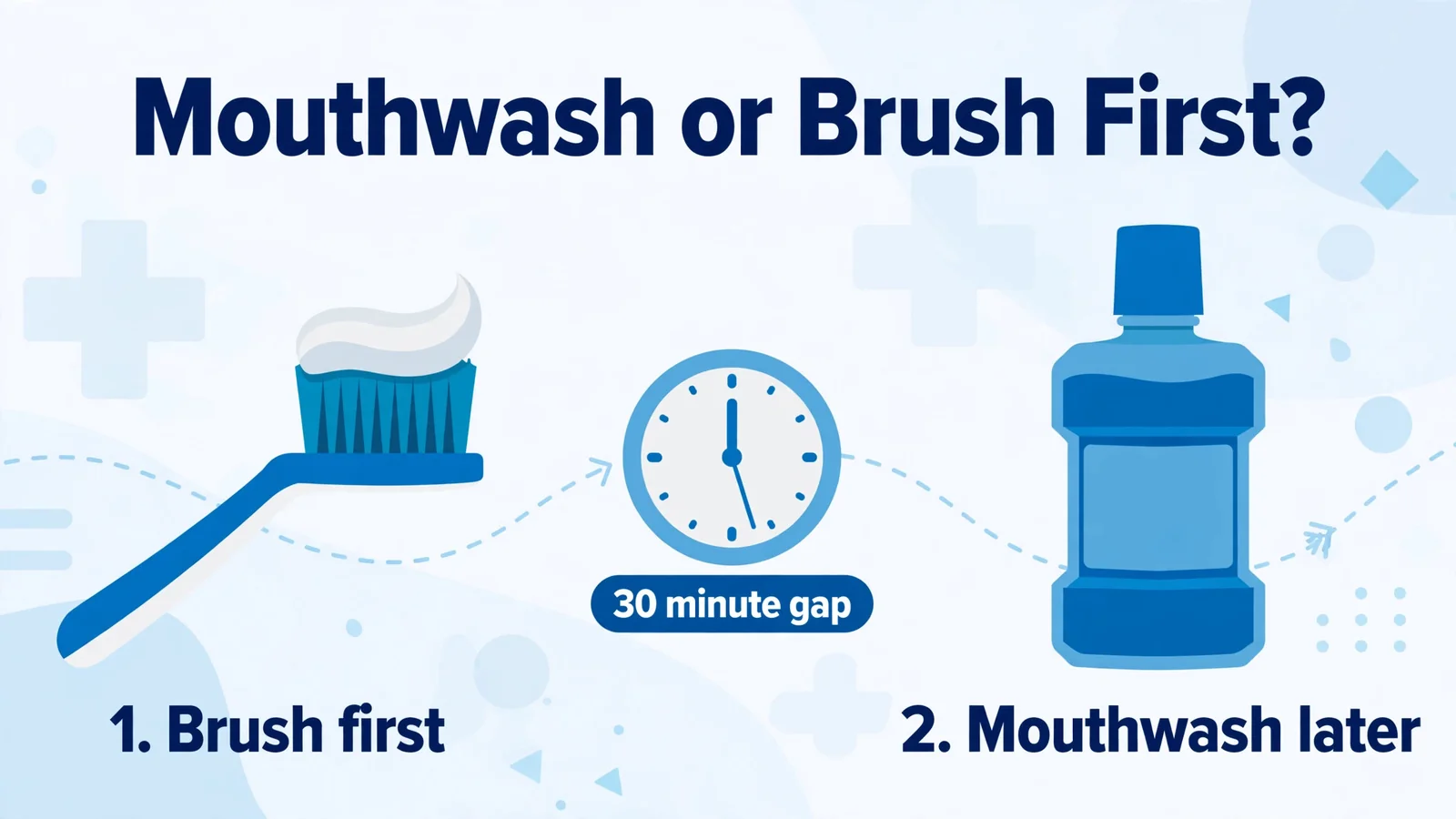
Use mouthwash after brushing, not before — but wait at least 30 minutes after brushing so the fluoride from your toothpaste keeps working. That is the short answer to the “mouthwash or brush first” question. Many people rinse with mouthwash right before or right after brushing without thinking about it, yet the order and timing genuinely change how well your toothpaste protects your teeth. In this guide, you will learn the correct order step by step, why fluoride timing matters so much, when mouthwash before brushing actually makes sense, the mistakes that weaken your routine, and simple tips dentists give for a healthier mouth.
Quick Answer
Brush first with fluoride toothpaste, spit out the extra toothpaste, and do not rinse with water. If you want to use mouthwash, use it at a different time of day — for example after lunch — or wait 30 to 60 minutes after brushing. Using mouthwash immediately after brushing washes away the concentrated fluoride that toothpaste leaves on your teeth, and that fluoride shield is what protects against cavities. If your mouthwash is a special one prescribed by a dentist, follow your dentist’s instructions, because treatment rinses follow different rules.
Why the Order Matters: The Fluoride Story
Toothpaste protects your teeth mainly through fluoride, a mineral that makes tooth enamel stronger and helps repair the earliest signs of decay. When you brush, you spread a concentrated layer of fluoride over every tooth surface. That layer keeps working after you stop brushing — but only if it stays there.
Mouthwash contains much less fluoride than toothpaste (unless it is a prescription rinse), and any rinse — even plain water — washes most of the toothpaste’s fluoride layer away. This is why dental organizations advise people to spit after brushing instead of rinsing. Adding mouthwash straight after brushing does the same damage as rinsing with water, plus it gives you a weaker fluoride coating in return.
Think of toothpaste fluoride as a protective paint. Brushing applies the paint. Mouthwash immediately after is like hosing the wall down before the paint dries. The wall still gets a little protection from the rinse itself, but far less than the paint would have given.
The Best Routine, Step by Step
A simple, dentist-approved routine looks like this. First, floss or use interdental brushes to clean between the teeth, where a toothbrush cannot reach. Second, brush for two minutes with fluoride toothpaste, covering all surfaces gently. Third, spit out the extra toothpaste — do not rinse with water, and do not use mouthwash yet. Fourth, if you love mouthwash, use it at another moment, such as after a meal in the middle of the day, or wait at least 30 minutes after brushing.
Morning and night routines can differ slightly. At night, brushing last is ideal: clean teeth, spit, and go to bed with the fluoride layer working while you sleep, when your mouth produces less saliva and teeth are most vulnerable. In the morning, if you want the fresh-breath feeling of mouthwash before going out, use it before breakfast or wait until after you have eaten and some time has passed since brushing.
| Step | Action | Why It Matters |
|---|---|---|
| 1 | Floss or clean between teeth | Removes plaque and food the brush cannot reach |
| 2 | Brush 2 minutes with fluoride toothpaste | Cleans surfaces and applies the fluoride shield |
| 3 | Spit, do not rinse | Keeps the fluoride layer on your teeth |
| 4 | Mouthwash at a separate time (or 30+ minutes later) | Freshens breath without washing fluoride away |
When Mouthwash Before Brushing Makes Sense
There are a few situations where mouthwash before brushing is reasonable. Some people use a pre-rinse to loosen plaque and freshen the mouth before brushing, and some therapeutic rinses are designed to be used at specific times in a treatment plan. If your dentist prescribed a chlorhexidine or high-fluoride rinse, the timing in your treatment plan always wins over general advice.
A pre-brush rinse can also help people who hate the taste of toothpaste first thing in the morning, or who want to rinse away overnight bacteria before brushing. The key point is that mouthwash should support brushing, never replace it. No rinse can remove plaque the way the mechanical action of a brush does. Mouthwash reaches where the brush missed, kills some bacteria, and freshens breath — but the brush and fluoride do the heavy lifting.
Types of Mouthwash and How They Change the Rules
Not all mouthwashes are equal. Cosmetic mouthwashes only freshen breath for a short time; they offer no real protection. Therapeutic mouthwashes contain active ingredients — fluoride for cavity protection, antibacterial agents for gum problems, or ingredients for dry mouth and sensitivity. Alcohol-free versions are gentler for people with sensitive mouths, dry mouth, or recovering tissues.
The label tells you what you have. Check whether your rinse contains fluoride and how much. A fluoride rinse used at a separate time of day can add real protection for people who get cavities easily. An antibacterial rinse may be part of a gum-disease plan. If you are unsure which type you need, ask your dentist — the right rinse depends on your teeth, not on advertising.
| Mouthwash Type | Main Job | Best Time to Use |
|---|---|---|
| Cosmetic (breath freshening) | Masks odors for a short time | Anytime for freshness, away from brushing |
| Fluoride rinse | Extra cavity protection | A separate time from brushing, e.g., after lunch |
| Antibacterial / therapeutic | Gum problems, bacteria control | As directed by your dentist |
| Dry-mouth rinse | Adds moisture and comfort | As needed, often alcohol-free formulas |
Common Mistakes People Make
The biggest mistake is rinsing with mouthwash immediately after brushing and washing away the fluoride. The second mistake is rinsing with water after brushing — same problem, smaller scale. The third mistake is using mouthwash instead of brushing when in a hurry. Breath may smell better for ten minutes, but the plaque stays and keeps producing acid and odor.
Other common errors: brushing too hard and hurting the gums, brushing for less than two minutes, skipping the night brush (the most important one), using children’s low-fluoride toothpaste as an adult with cavity problems, and swallowing mouthwash — always spit it out, and keep it away from young children, who should only use rinses made for their age and only when they can spit reliably, usually around age six.
One more tip ties the whole routine together: an electric toothbrush with a two-minute timer removes the guesswork from brushing time, and a small cup of water by the sink reminds you to rinse with water only — never mouthwash — when your mouth feels dry after brushing. Small habits like these make the correct order automatic within a week.
Special Cases: Braces, Kids, and Sensitive Teeth
People with braces collect more plaque around brackets, so dentists often add a fluoride rinse at a separate time of day for extra protection. The rule stays the same: rinse away from brushing, so both the toothpaste fluoride and the rinse fluoride get their own time to work.
For children, timing matters even more because they swallow more residue. Supervise brushing, use a pea-sized amount of toothpaste for young kids, teach spitting without rinsing, and skip mouthwash until a child can spit it out fully. For sensitive teeth, choose alcohol-free products and ask your dentist about desensitizing toothpaste — and give it time to sit on the teeth after brushing rather than rinsing it away.
What Dentists and Health Organizations Say
Major dental organizations, including the American Dental Association and the UK’s NHS guidance, share the same core advice: brush twice a day with fluoride toothpaste, spit instead of rinsing after brushing, and do not use mouthwash right after brushing because it dilutes the fluoride protection. The NHS wording is famous for its clarity: do not use mouthwash immediately after brushing, and choose a different time, such as after lunch.
This does not mean mouthwash is bad. It means timing turns mouthwash from a fluoride-washer into a helpful extra. Used at the right moment, it freshens breath, adds fluoride, and supports gum care. Used at the wrong moment, it quietly cancels the best part of your brushing.
Should You Brush Before or After Breakfast?
This is the closest cousin of the mouthwash question, and it confuses just as many people. Brushing before breakfast removes the bacteria that built up overnight — the ones responsible for morning breath — and lays down fluoride before food and drink arrive. Brushing after breakfast cleans away food debris, but it comes with a catch: acidic foods and drinks like orange juice, fruit, and coffee soften your enamel for a while, and brushing softened enamel can wear it down.
Dentists generally solve it this way. If you brush after breakfast, wait at least 30 to 60 minutes after eating so your saliva can reharden the enamel. If your mornings are rushed, brush before breakfast with fluoride toothpaste and simply rinse with water after eating. Either approach works when the timing rules are respected — the pattern is the same as the mouthwash rule, because both rules exist to protect enamel and fluoride at the moments they are most fragile.
The one routine to avoid is brushing hard immediately after acidic food or vomiting, when enamel is at its softest. In those moments, rinse gently with water, wait, and brush later. Your enamel will thank you for the patience.
FAQs
1. Should you use mouthwash before or after brushing?
Neither right before nor right after is ideal for most people. The best choice is to use mouthwash at a separate time of day, like after lunch. If you must combine them, wait at least 30 minutes after brushing.
2. Why should you not use mouthwash right after brushing?
Because it washes away the concentrated fluoride that toothpaste leaves on your teeth. That fluoride layer keeps strengthening enamel after you brush. Mouthwash has far less fluoride, so you trade strong protection for weak protection.
3. Should you rinse with water after brushing?
No. Spit out the extra toothpaste and leave the rest. Rinsing with water removes fluoride just like mouthwash does. This “spit, don’t rinse” rule is one of the simplest ways to cut cavity risk.
4. Is mouthwash before brushing ever a good idea?
It can be, as part of a dentist’s treatment plan or as a pre-rinse to loosen plaque and freshen up. It is not harmful in the way post-brush rinsing is, but it never replaces the cleaning power of the brush itself.
5. Can mouthwash replace brushing if I am in a hurry?
No. Mouthwash cannot remove plaque, which is a sticky film that needs physical scrubbing. Skipping brushing leaves the plaque in place, and the bacteria in it keep making acid and bad breath all day.
6. When is the best time of day to use mouthwash?
After a meal in the middle of the day is a popular choice, because it freshens breath and adds fluoride hours away from your morning and night brushing. Many people keep a small bottle at work for exactly this reason.
Conclusion
The mouthwash or brush first question comes down to one idea: protect the fluoride. Brush first with fluoride toothpaste, spit without rinsing, and let that fluoride layer do its quiet work. Give mouthwash its own moment — after lunch, before going out, or at least 30 minutes after brushing — and it becomes a helpful partner instead of a fluoride thief. You now know the right order, the reasons behind it, and the exceptions for prescription rinses, braces, and kids. Small timing changes cost nothing, take no extra effort, and give your teeth measurably better protection every single day.